The Challenge
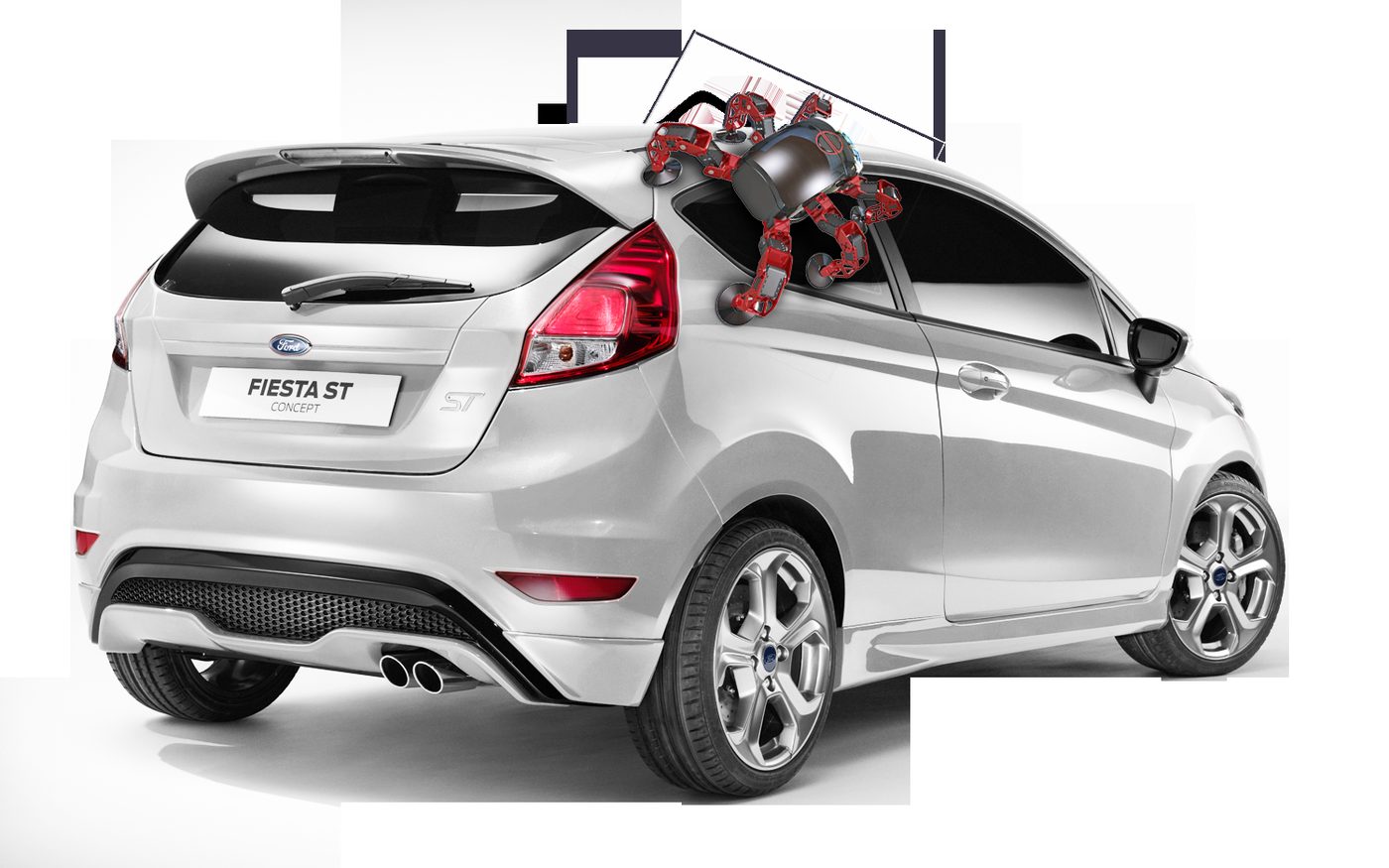
Cleaning large vertical surfaces — car bodies, storefront glass, building facades — is still manual work, and at height it is dangerous work. The idea brought to us was simple to describe and very hard to engineer: a platform that moves across the surface on its own and cleans it.
Two conflicting requirements defined the project. The robot must grip the surface hard enough not to fall. It must also be light — because the heavier it is, the more grip force it needs, and with it more power draw and more load on the motors. Every extra kilogram of structure makes the whole system more expensive.
The Engineering Solution
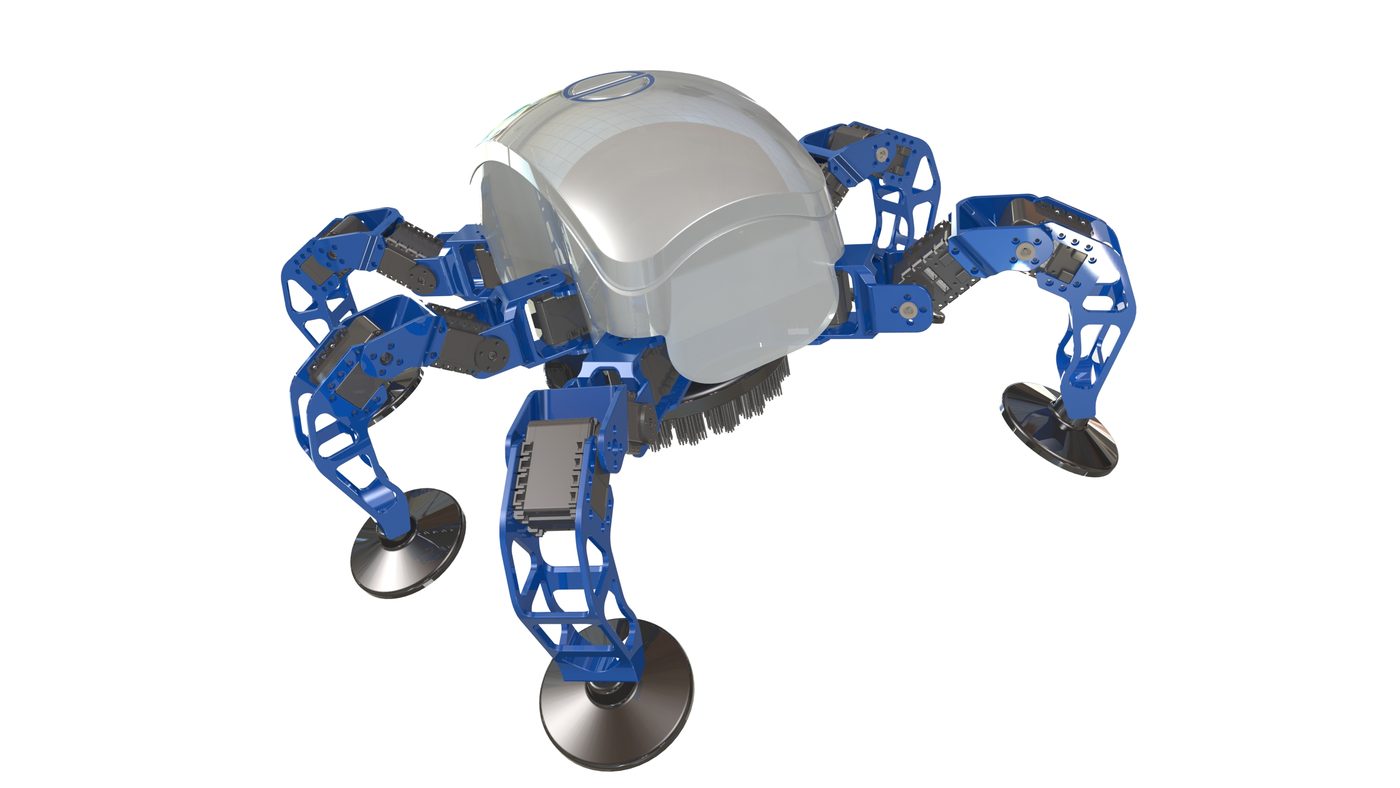
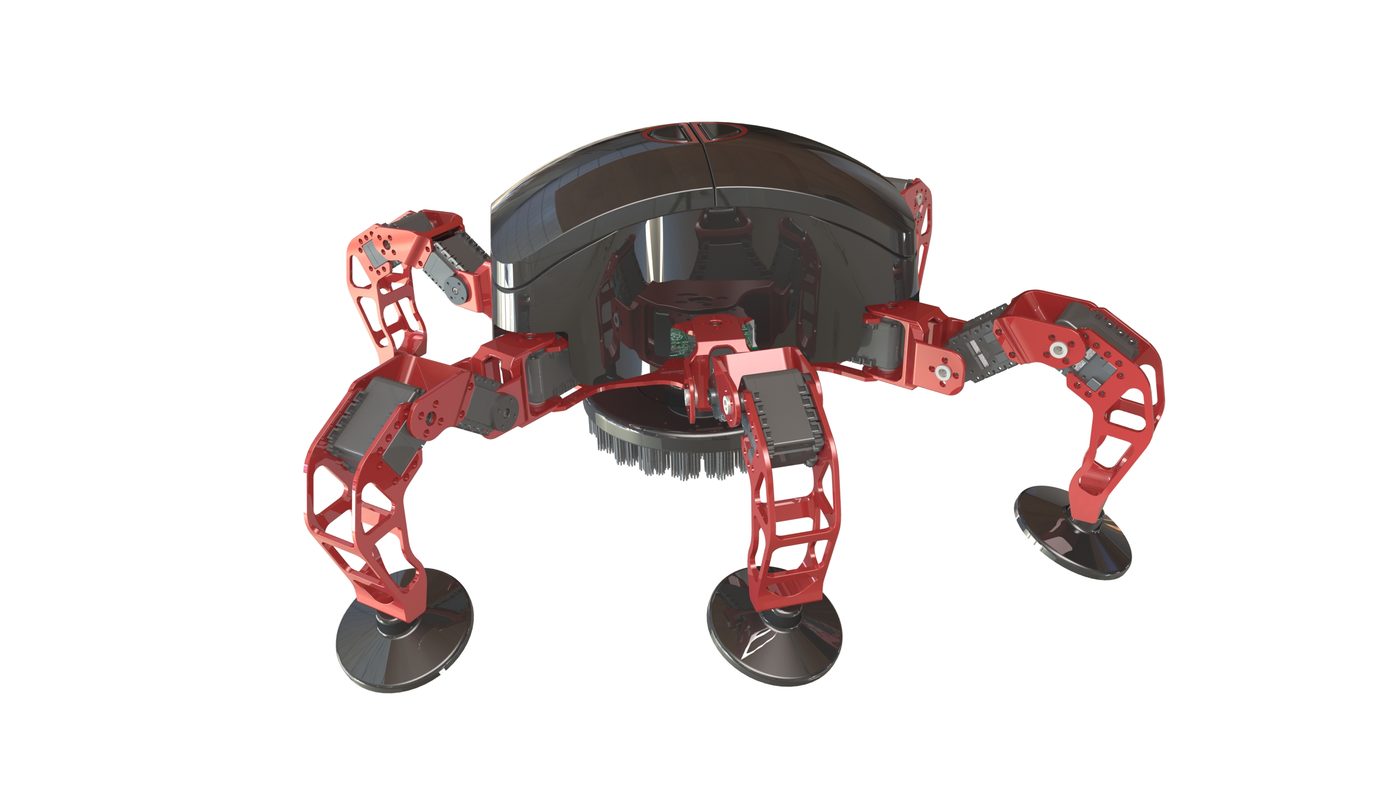
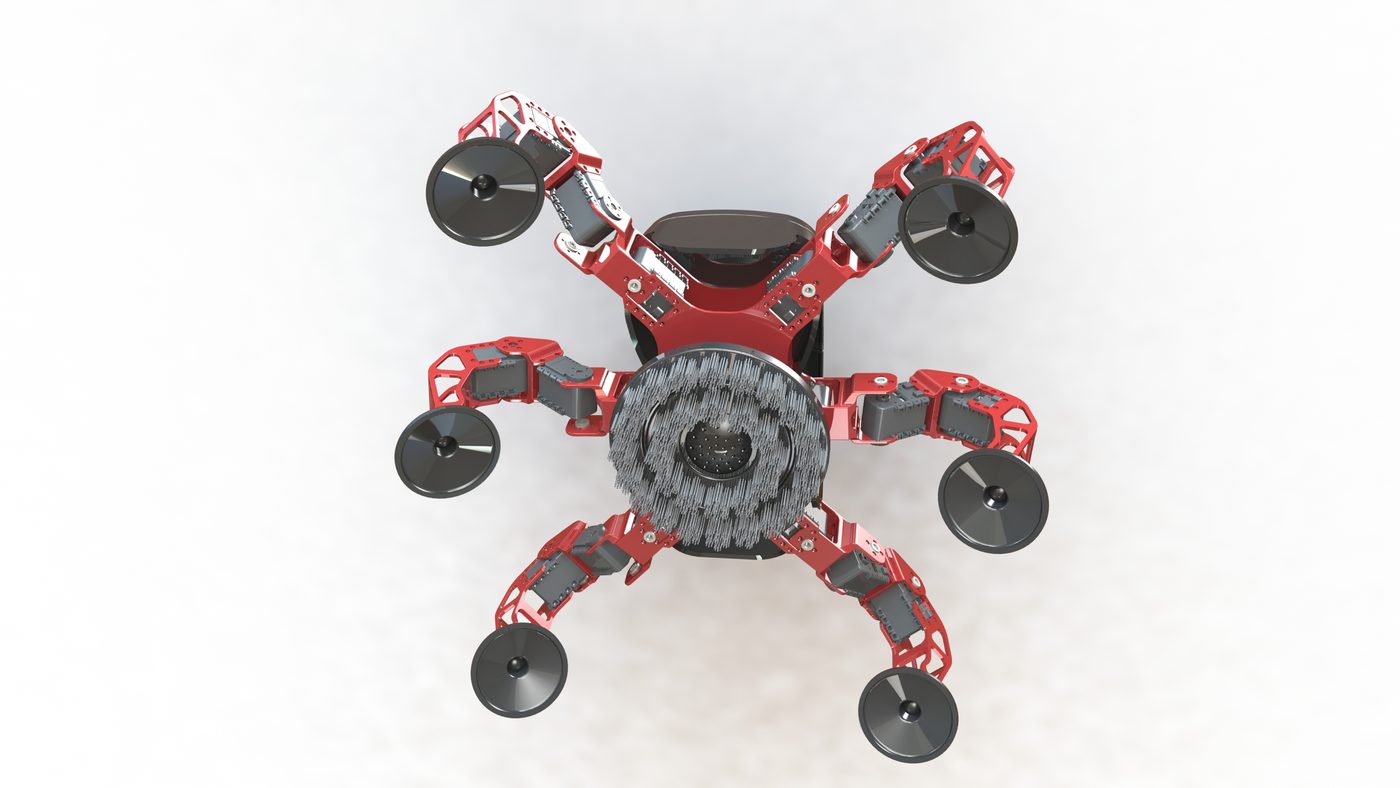
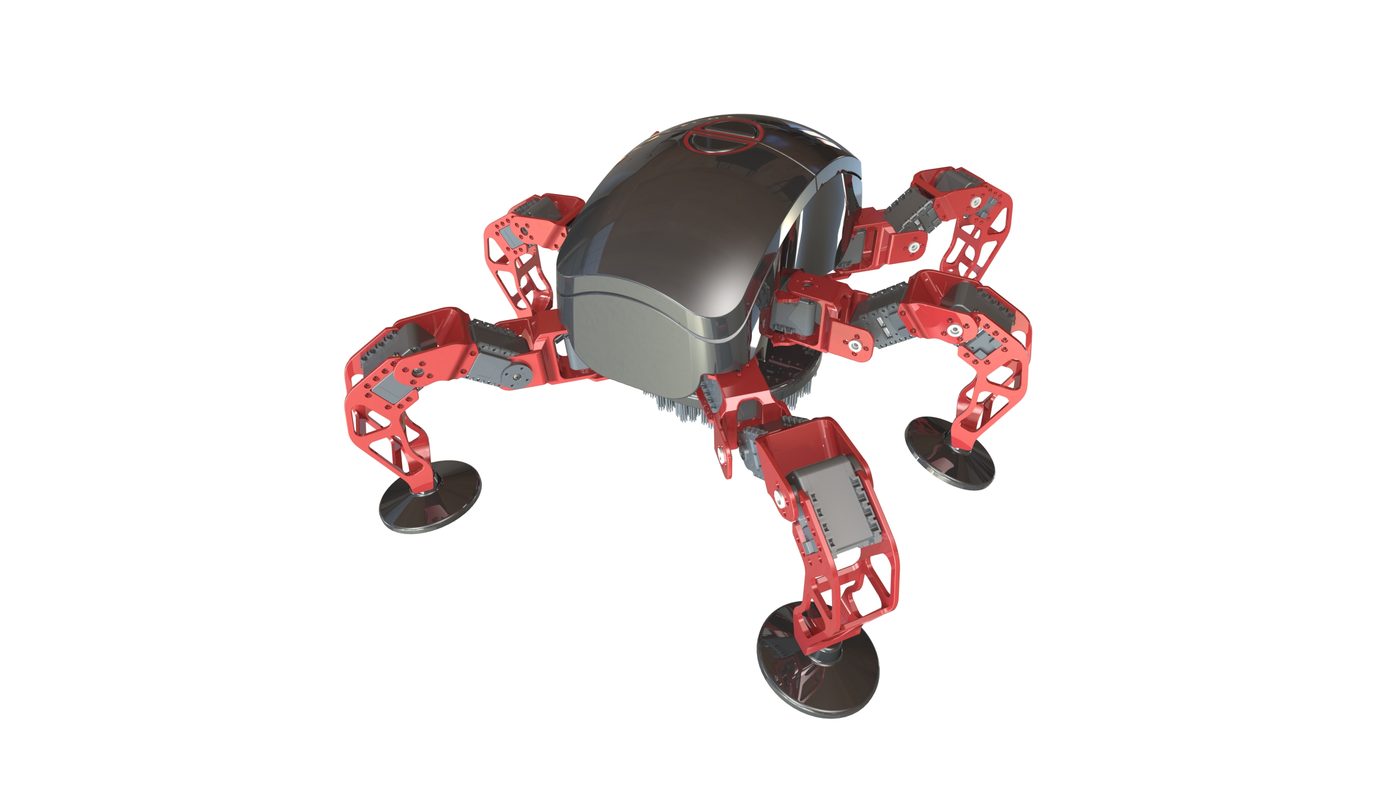
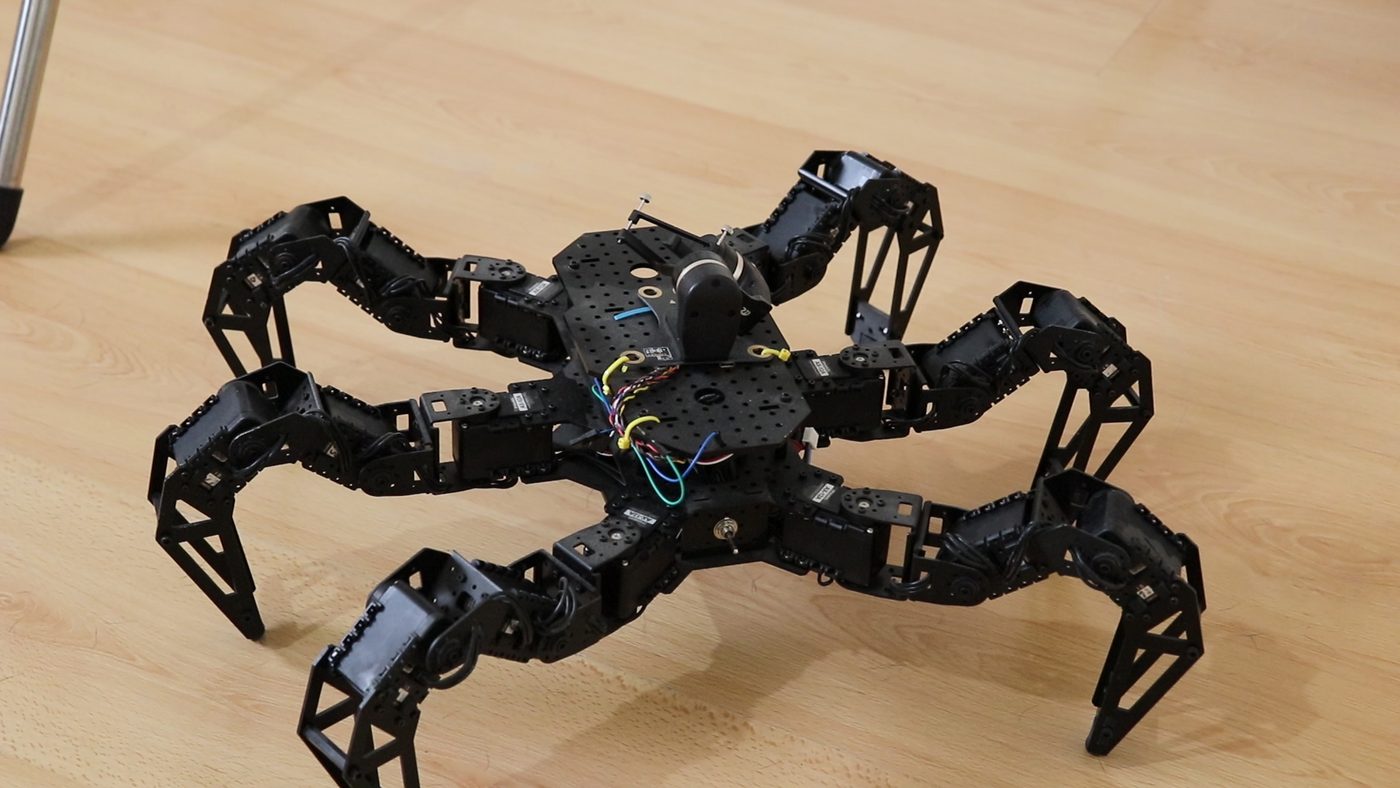
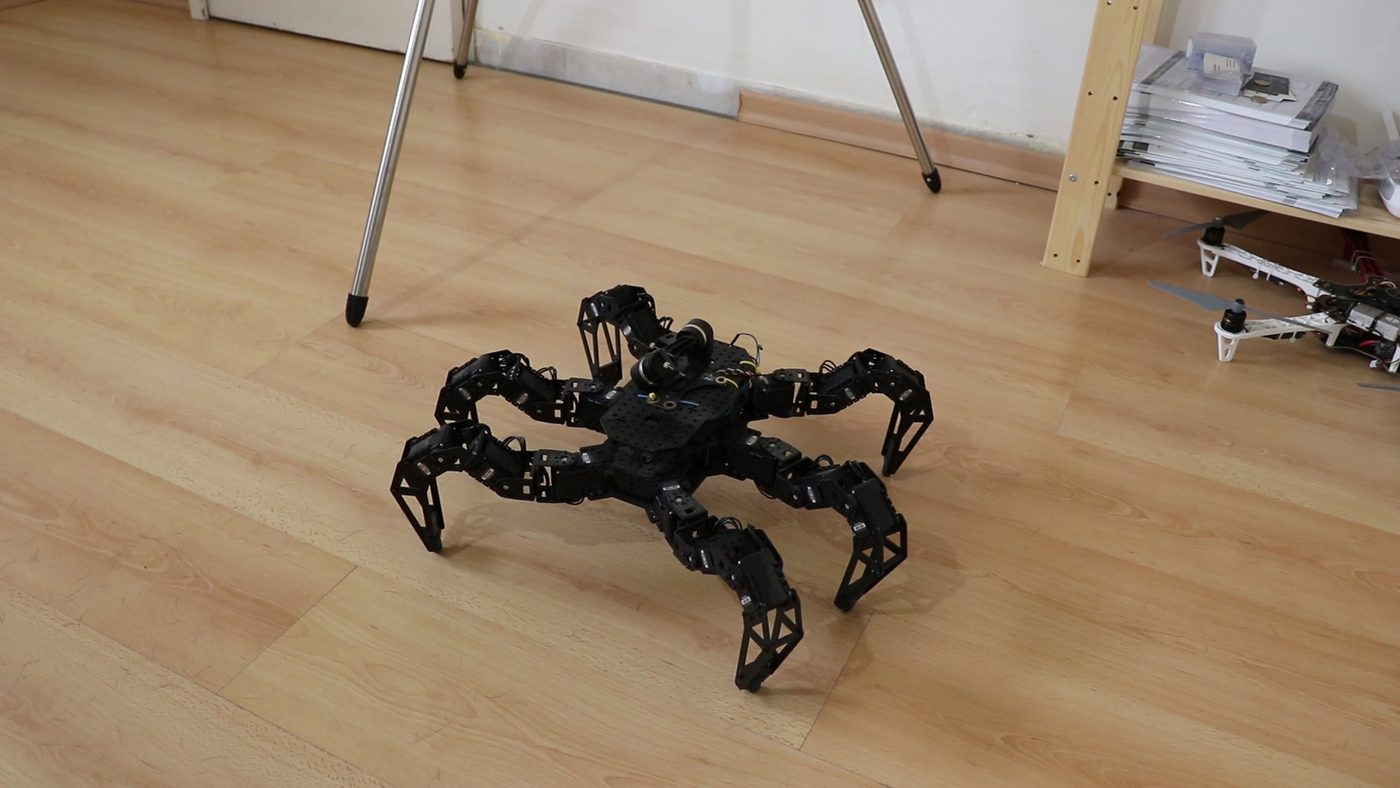
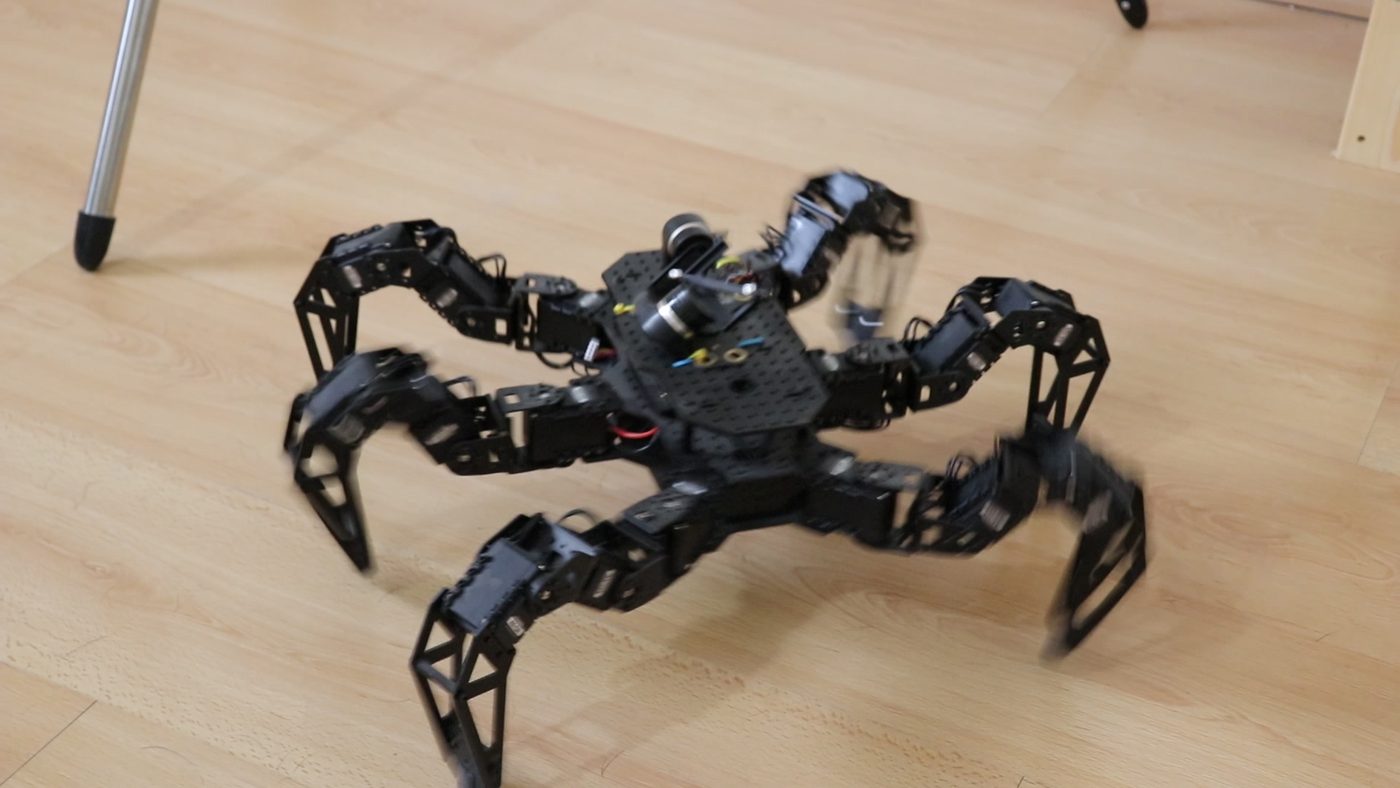
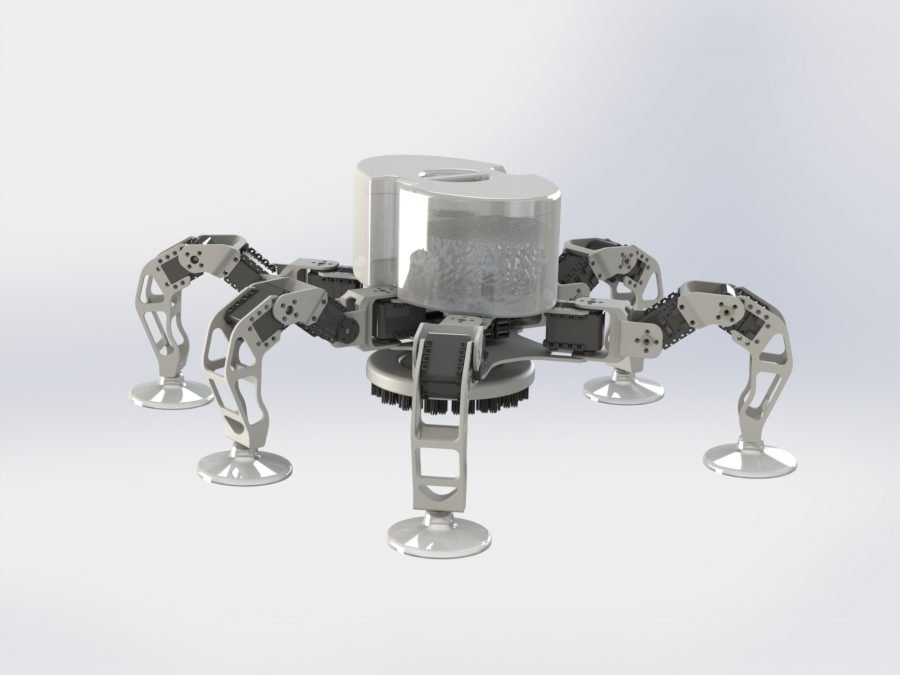
We chose a six-legged walking architecture over wheels or tracks. The advantage: at any moment some legs are gripping the surface while the others advance, so adhesion is never fully broken. The geometry also lets the robot step over ridges and transitions between surfaces — something a wheel cannot do.
The structure was designed as a modular system: each leg is an identical unit with its own motor, joint, and gripping pad. Modularity is an engineering decision, not an aesthetic one — it cuts the number of unique parts to manufacture, lowers tooling cost, and allows a faulty leg to be swapped in the field without disassembling the robot. The mechanism and force analysis behind it draws on classic mechanical engineering.
The Core Problem: Losing Grip
In projects like this the hard problem is not locomotion but loss of grip. A robot that loses one leg mid-step must detect it and recover within milliseconds or it falls. The solution combined state sensors in every leg — part of the electronics development effort of driving many motors in precise timing — with a conservative rule baked into the gait logic of the embedded software: the robot never lifts more than a third of its legs at once, even at the cost of a slower walk. That decision came from risk analysis, not performance ambition — and decisions like it are what determine whether a product works in the field. The prototype itself combined printed and machined parts according to load, following the practices in our prototyping guides.
What to Learn From It
Robotics is the definitive multi-disciplinary field: mechanics, electronics, and software constrain each other, and a change in one moves the other two.
Working on a robotics idea? Contact Projects House through the form and let's engineer it together.
Photos from the project