The Idea
Food waste disposers sit under kitchen sinks in millions of homes, but they solve only half the problem: the scraps still have to be pushed toward the drain by hand or with the faucet stream. The client asked for a system that does it alone — a spray head that rises from the center of the sink, rotates, and sweeps every scrap toward the disposer, at the press of a button or from an app.
Two Concepts, One Engineering Decision
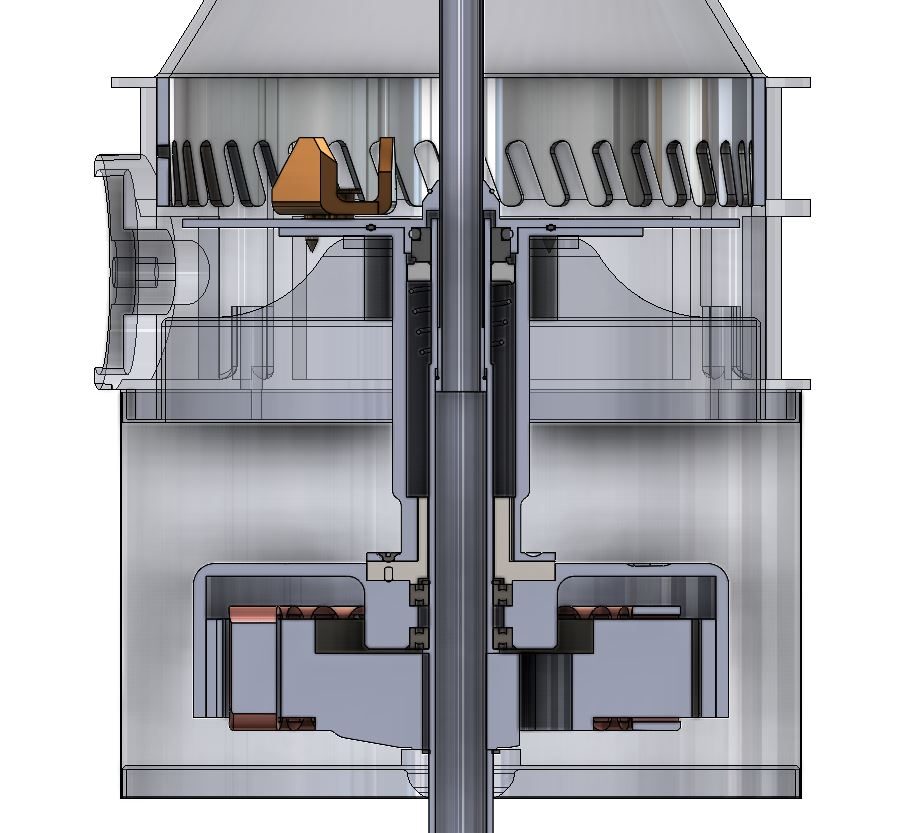
Two architectures were evaluated. In the first, the spray passes through the hollow shaft of a ring motor, so the water rises through the center of the grinder itself — an elegant solution that requires a rotating seal around a wet shaft, a genuinely hard sealing challenge. In the second, the spray head sits beside the grinder and is fed by a separate line, with a standard motor and no need to seal the main shaft. The structured comparison between alternatives — cost, reliability, manufacturing complexity — is the heart of the work we describe in mechanical engineering.
From Design to Hardware
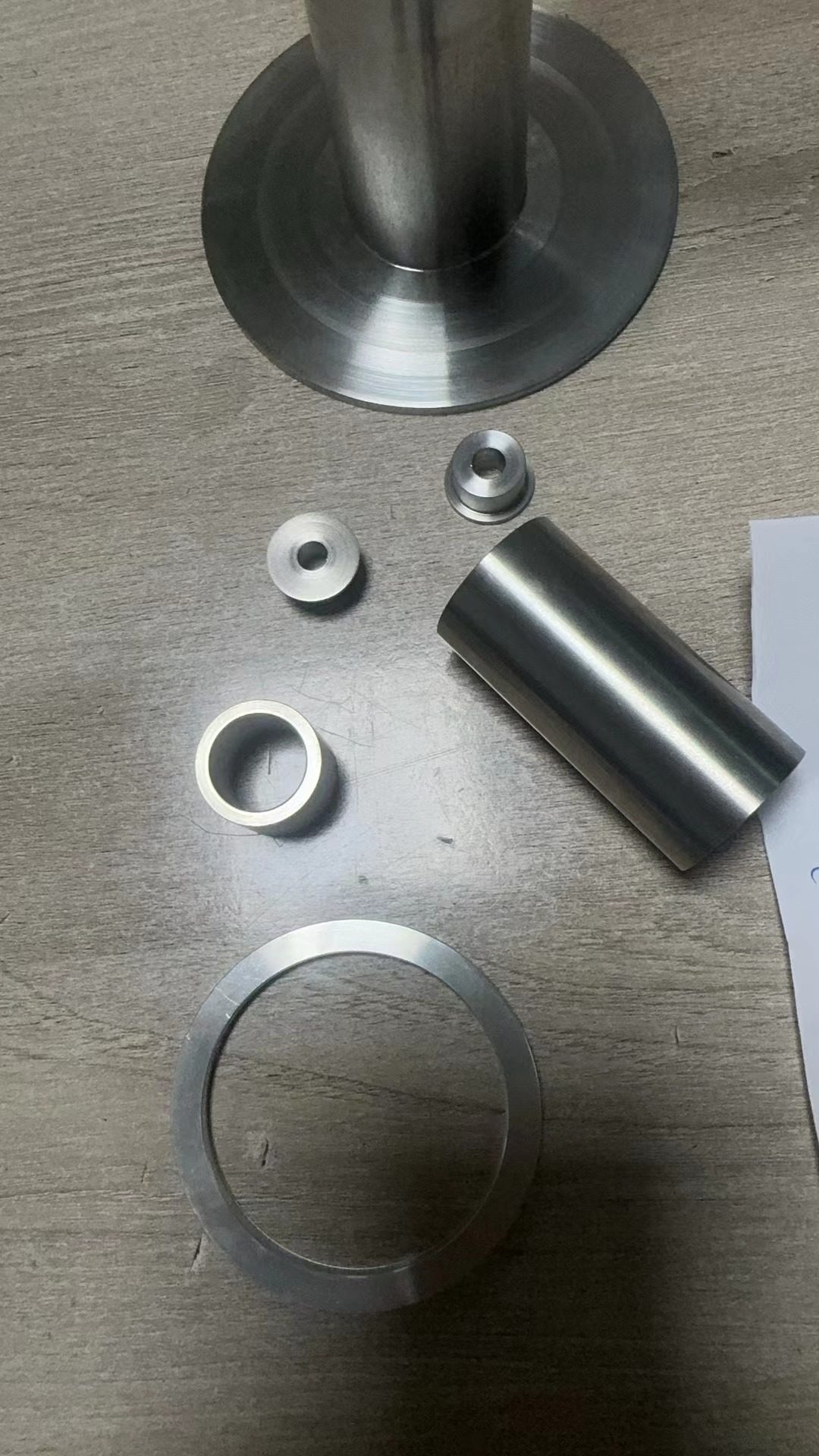
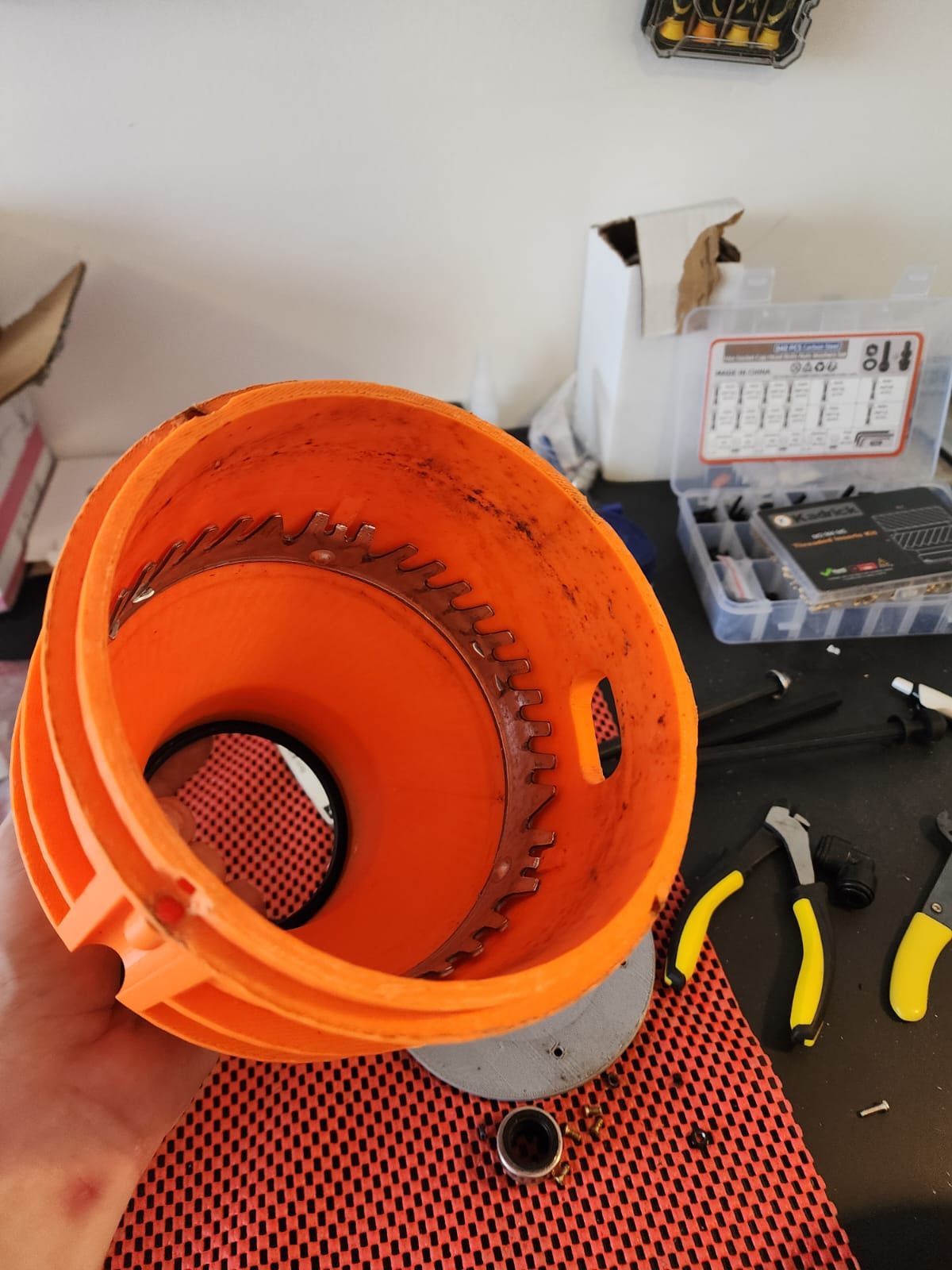
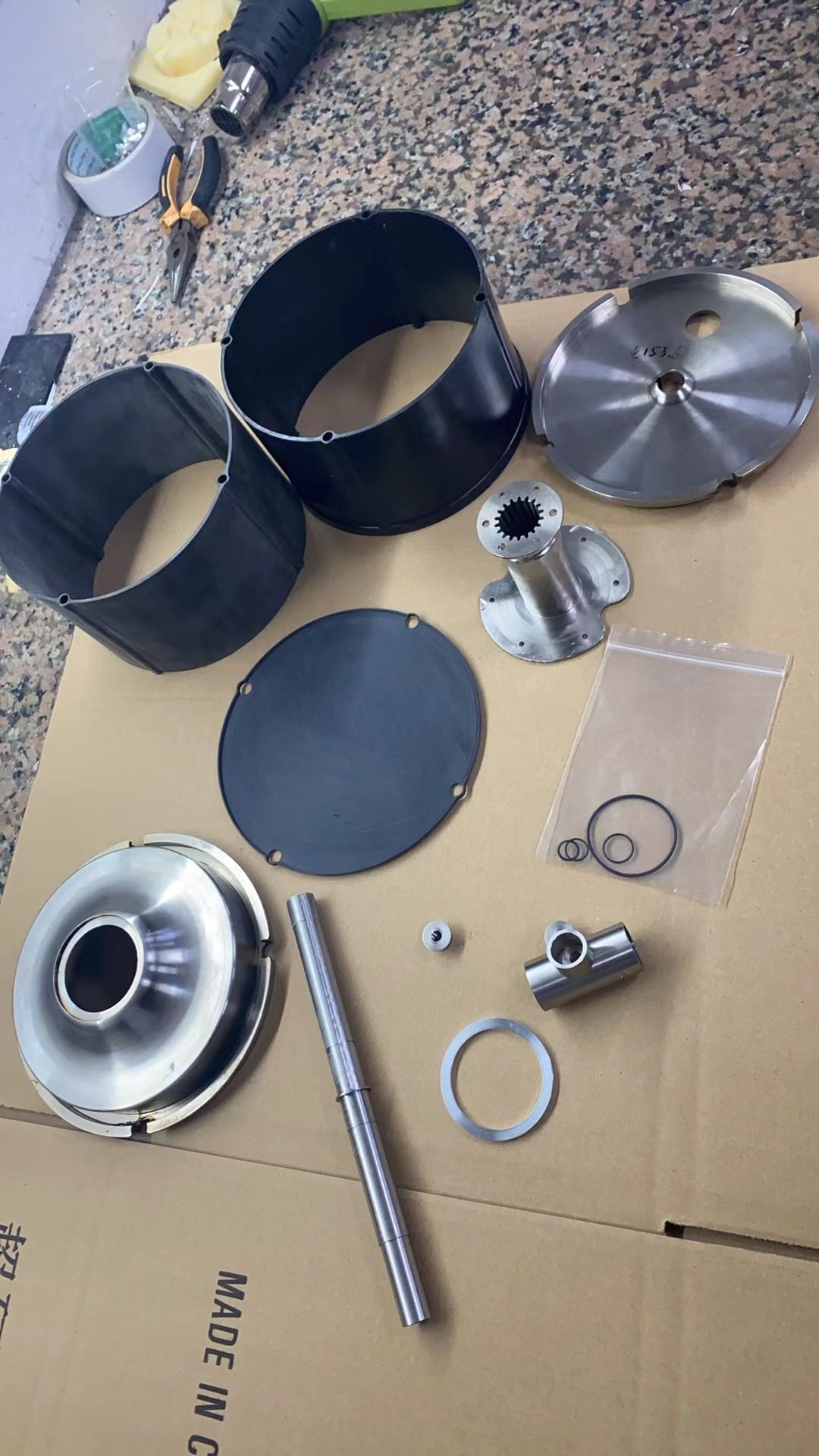
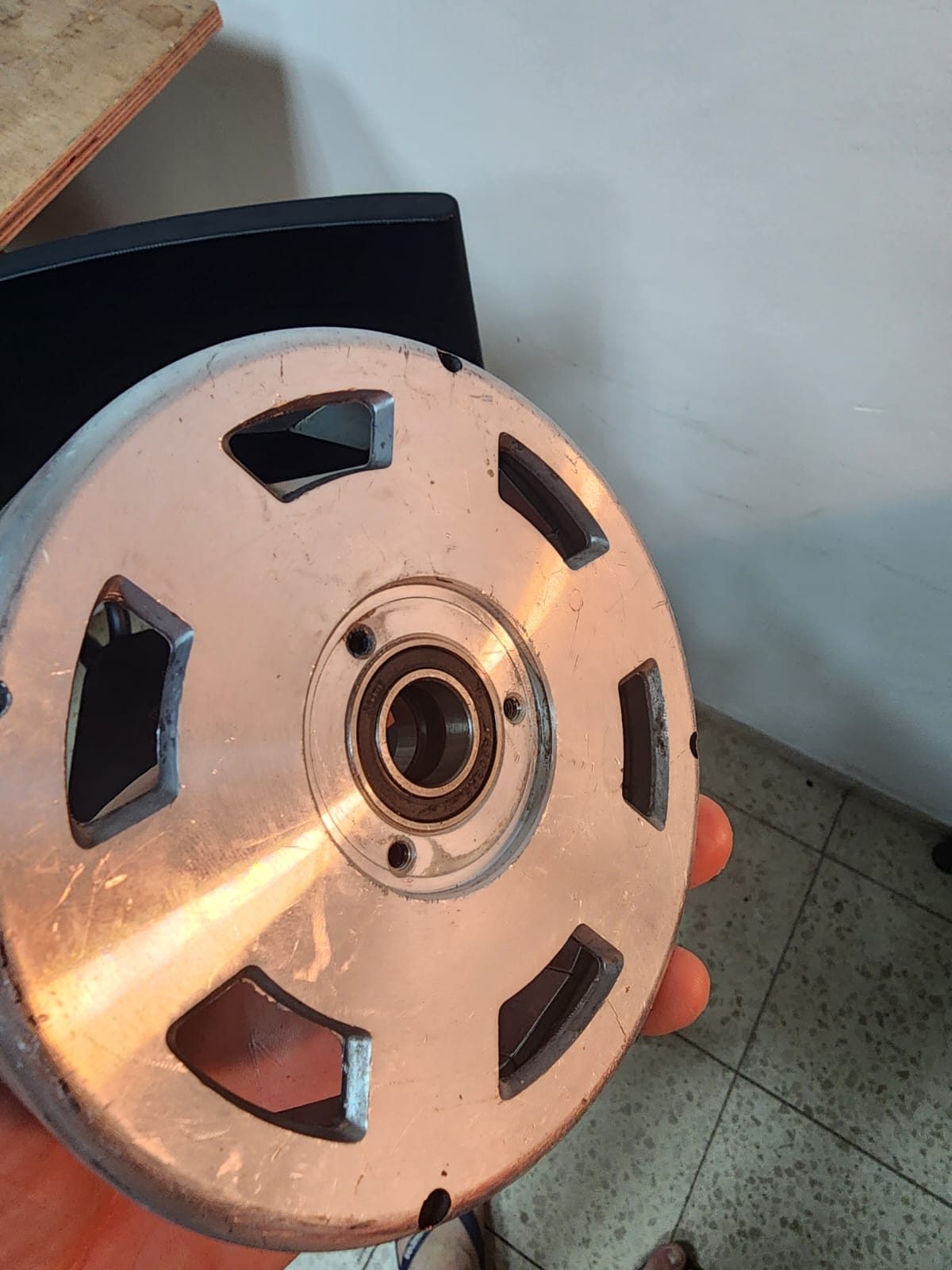
The system was built and tuned on a dedicated sink test station in the lab: an electric water valve, a three-part metal-machined spray head, a wirelessly connected controller with app control, and a disposer that underwent adaptations. An experimental grinding chamber was 3D printed with a metal tooth ring so different grinding geometries could be tried quickly, and the drive assembly was torn down and studied in depth — bearings and mechanical seals included. The control logic keeps a safe sequence: water opens before grinding and closes after it with a delay, so the chamber rinses clean at the end of every cycle and the grinder never runs dry.
Development Scope
Mechanics — the rising spray head, shaft sealing, and drive mechanisms; hydraulics — valves, pressures, and jet geometry; and electronics plus software for control, power relays, and app operation.
Takeaway
When a product mixes water, electricity, and rotating mechanics, test order decides everything: prove the water path and sealing on a rig first, then close the design around what worked. The portable sink station we built still serves the project — every improvement to the spray or chamber is measured under identical conditions.
Combining water, power, and mechanics in your product? Contact Projects House to talk it through.
Photos from the project