The Need
Heating a hookah with charcoal is a traditional ritual — and a genuine nuisance: slow lighting, ash, odor, and the burn and fire hazard of glowing coals. The client asked for a complete electric replacement — a heating head that runs on batteries, reaches the same working temperatures as charcoal, and behaves like a modern consumer product.
First, Measure
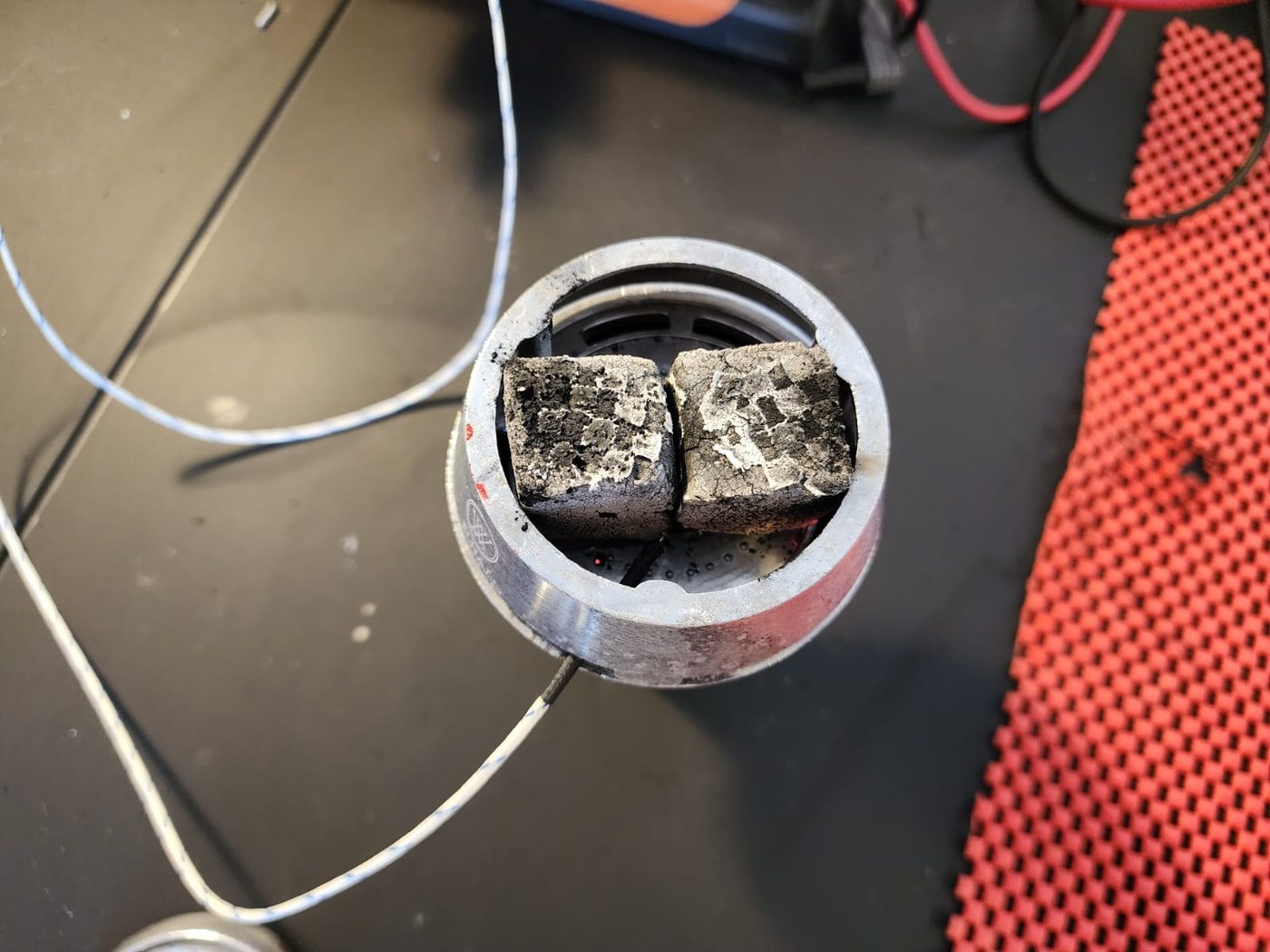
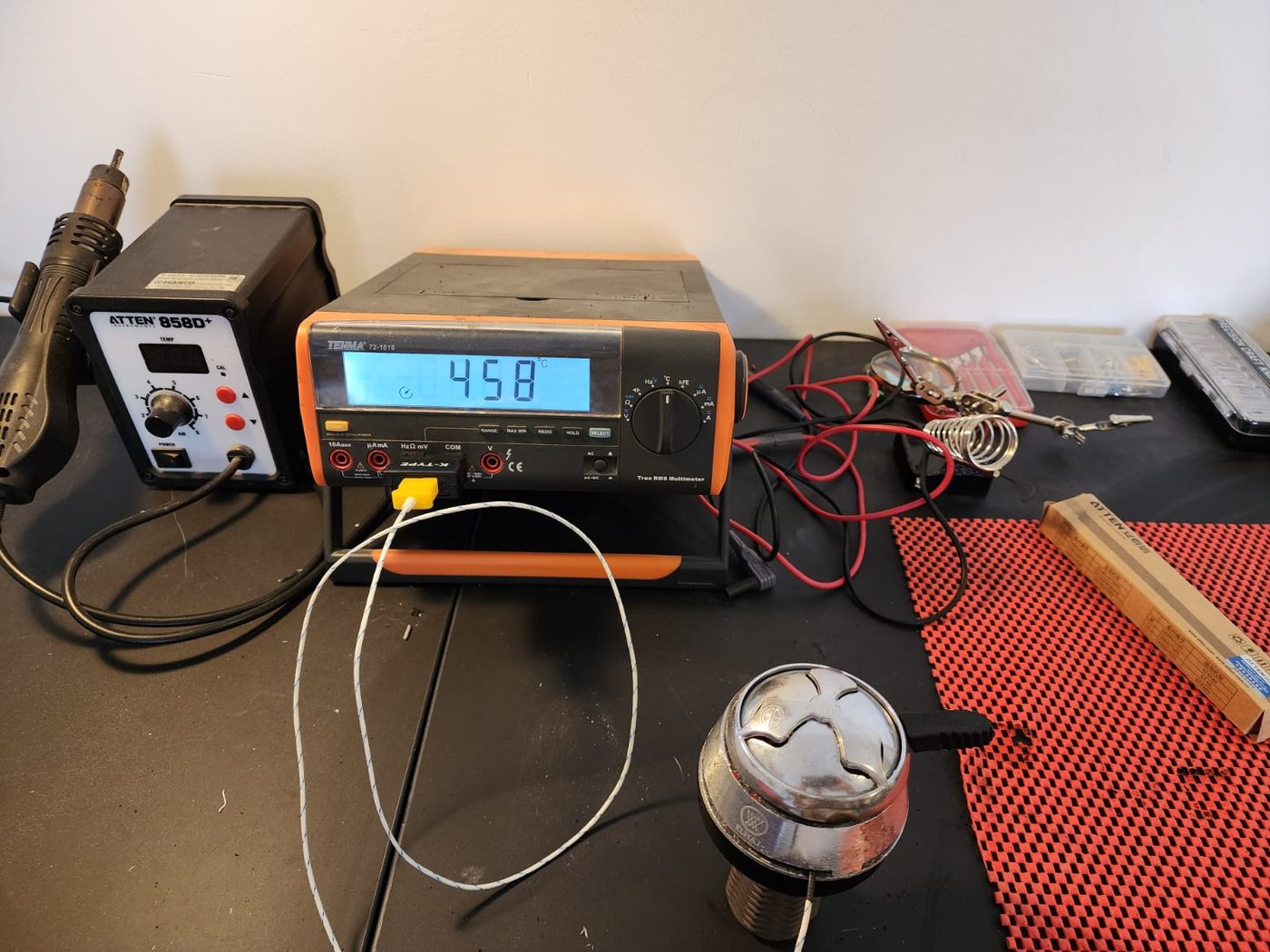
Before designing a heating element, you have to know exactly what you are replacing. In the lab we instrumented a real charcoal reference setup with a temperature sensor and a thermal camera: the coal surface reaches roughly 450–470 degrees Celsius, while the metal surface near the tobacco stabilizes around 200–210 degrees. Those became the design targets — the measure-first approach that anchors serious electronics development.
The Engineering Solution
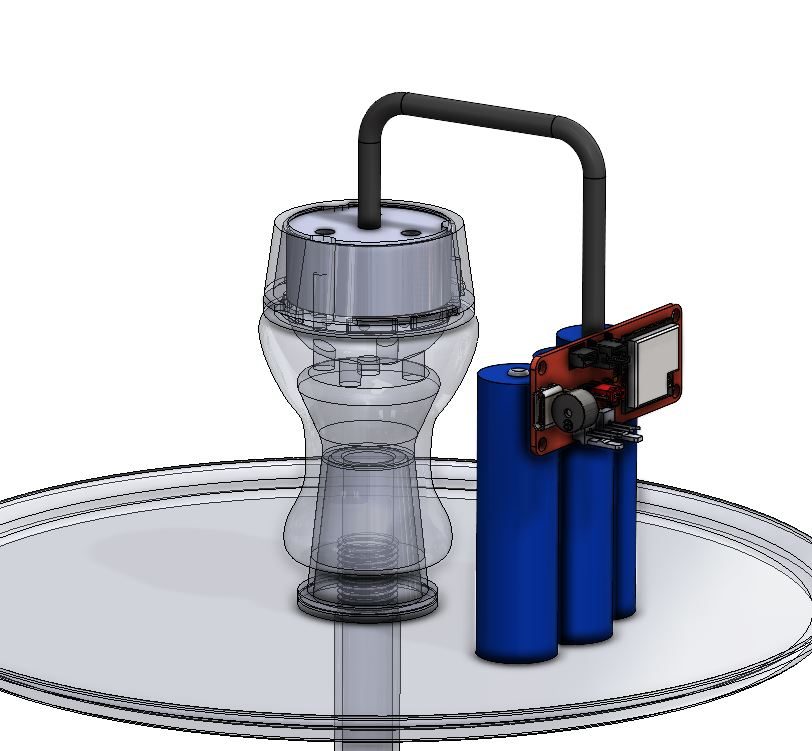
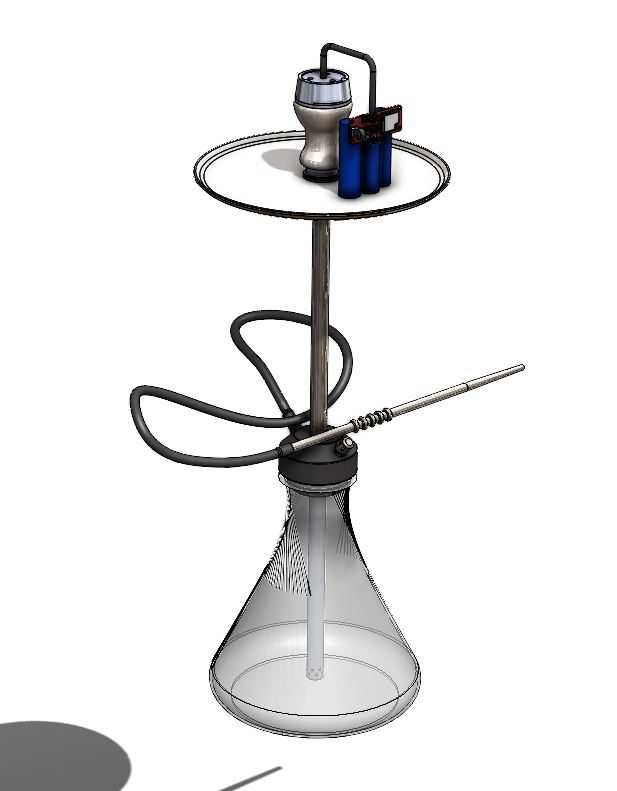
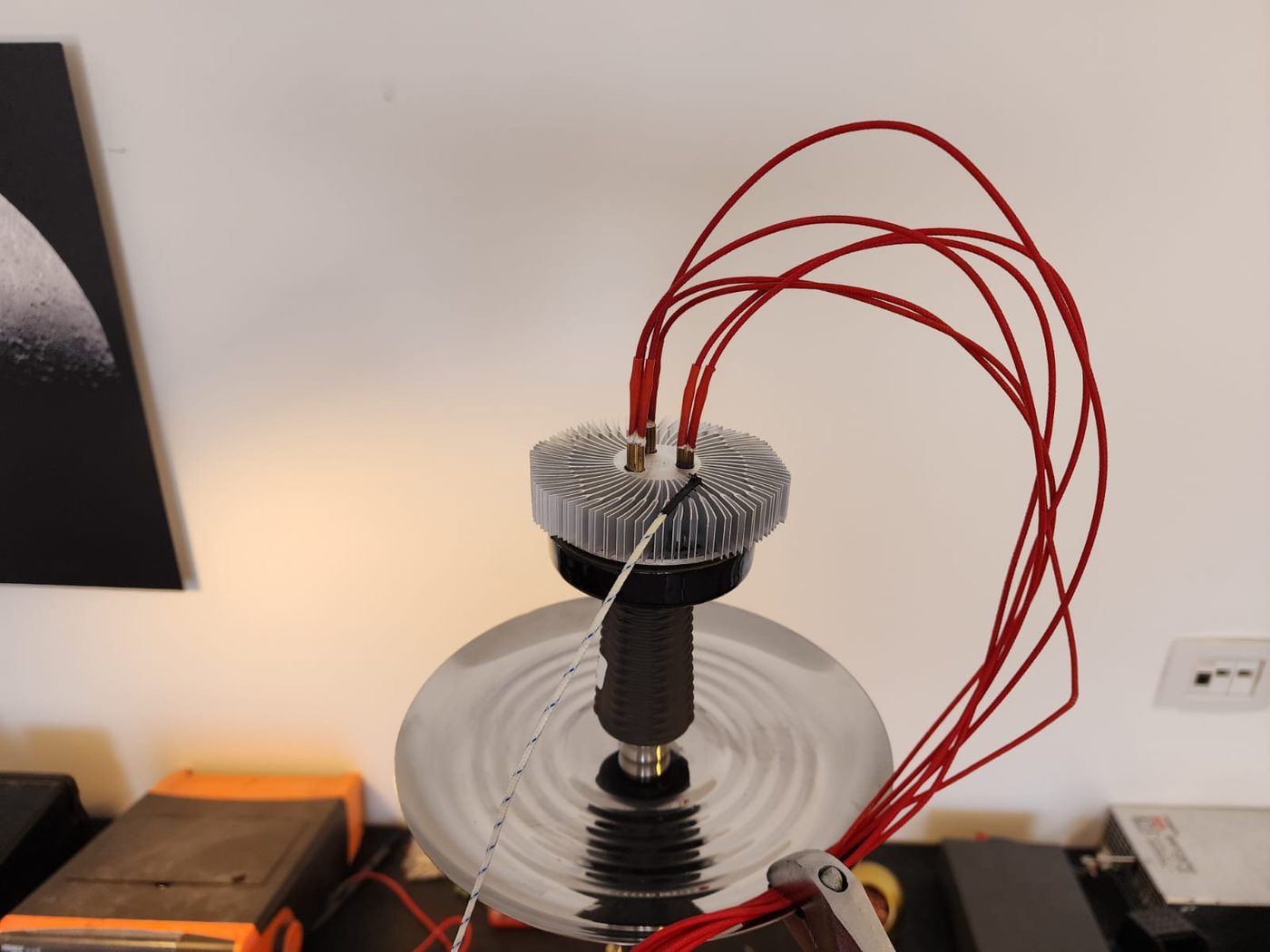
A thermal simulation of the metal body at three power levels showed that about 40 watts is enough to hold the working temperature — a number that dictates the entire electrical chain, from the batteries to the ceramic heating elements. Simulation-driven design of this kind sits at the heart of our mechanical engineering practice. A pack of three rechargeable batteries delivers more than fifty minutes of operation and connects through a single cable, so swapping a drained pack for a charged one takes a second. A controller reads a temperature sensor inside the heating body and holds the temperature steady, while a motion sensor detects a dropped head and cuts the heat instantly — a safety feature charcoal will never offer. The user experience was designed like a modern consumer device: a single power button, indicator lights for heat and battery status, and an optional wall-power connection for anyone who prefers to skip batteries entirely.
Development Scope
- Thermal engineering: a metal body with ceramic elements, insulation, and thermal simulation.
- Electronics: temperature control, battery management, and safety shutoff.
- Prototyping: reference measurements and heating trials — see our guide to prototyping.
The Lesson
The estimated component cost at volume is low enough for the product to compete with the price of just a few months' charcoal supply — exactly the kind of feasibility math every new product development effort should run early.
Have an idea that replaces an old ritual with modern engineering? Contact the Projects House team and let's measure, simulate, and build it.
Photos from the project