The Challenge
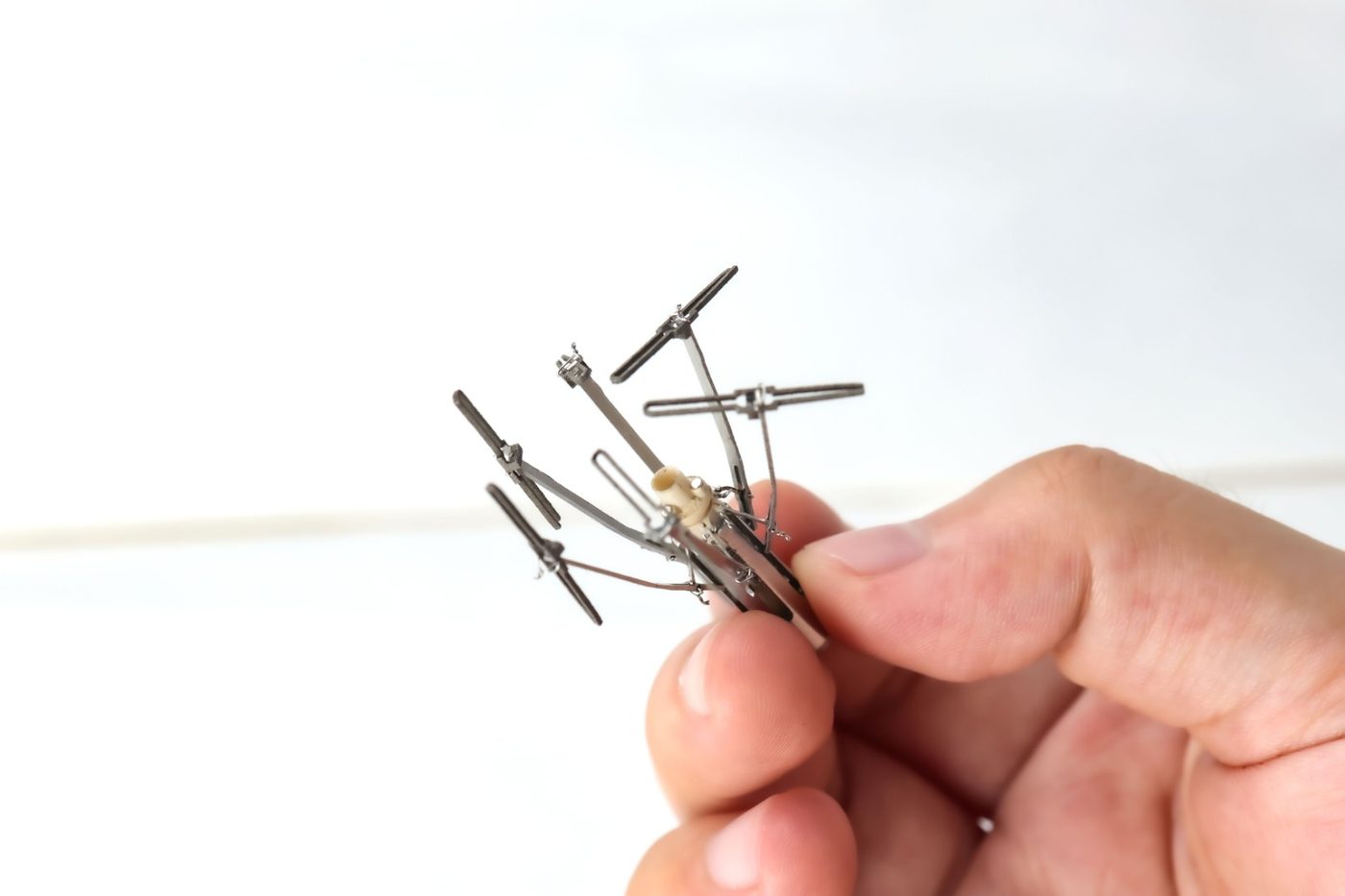
A heart valve that fails to open properly is a condition treated today with surgery or a complex catheter-based intervention. Our client developed a different approach: a miniature capsule delivered to the heart through a dedicated delivery system, which on reaching its target deploys via a mechanical release mechanism — spreading anchor arms and performing the opening action from within. Our job was to turn the principle into a working assembly.
Engineering at Millimeter Scale
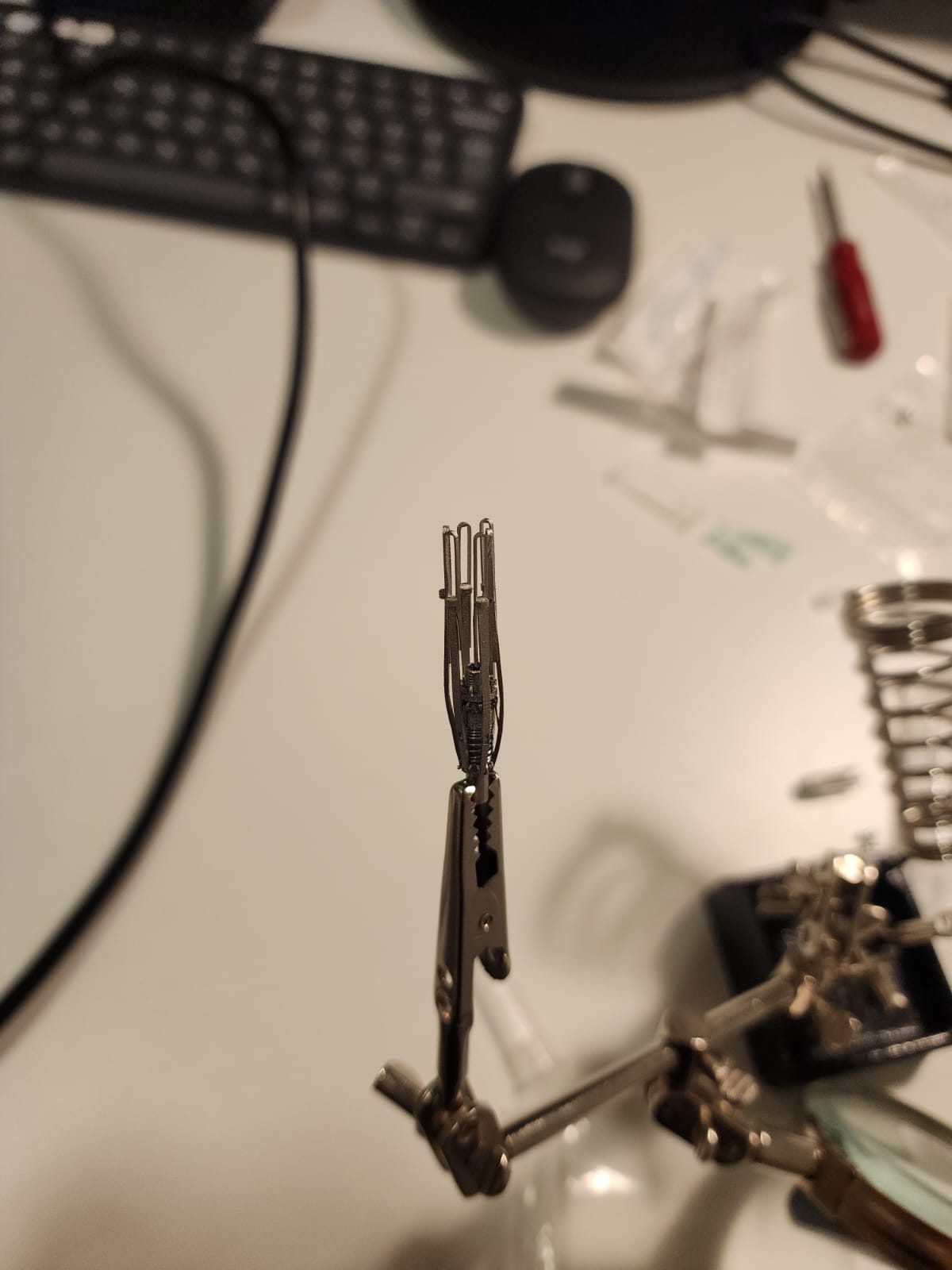
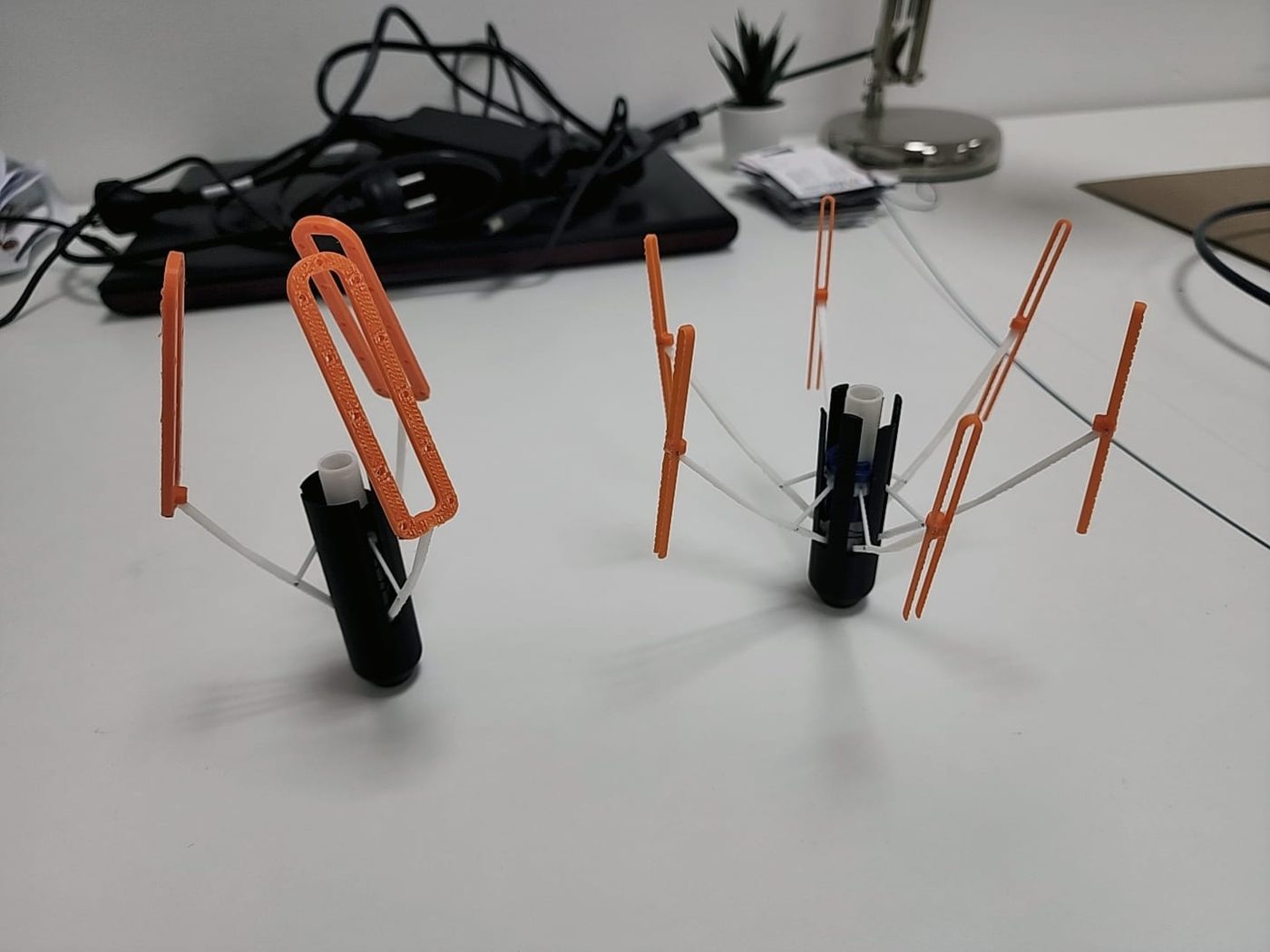
When the entire mechanism must fold down to the diameter of a catheter, every detail becomes critical: hinge pins as thin as a needle, springs ten millimeters long, and arms that must deploy in one dependable motion. We validated the kinematics first on scaled-up plastic models, and only then moved to miniature metal parts produced by additive manufacturing — a process that allows geometries impossible to machine at this size, as we describe in our guide to 3D printing. The mechanism work itself rests on the spring and linkage design fundamentals of mechanical engineering.
What a First Assembly Teaches
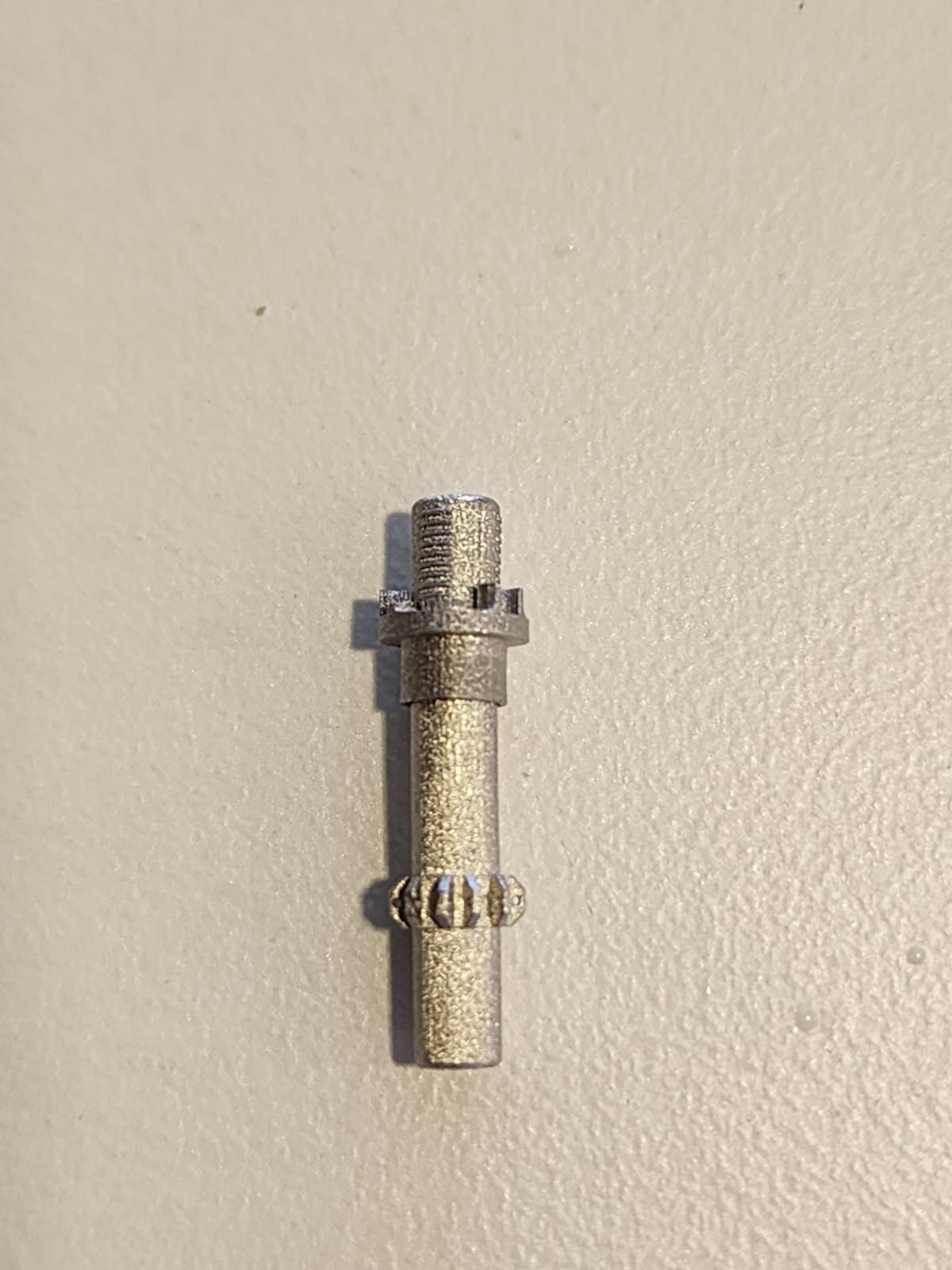
The first production round of parts showed us where the risk lives: slight warpage in long parts, roundness deviation in rotating parts, and surface roughness — each one adds friction that a miniature mechanism does not forgive. The findings were translated into sharpened quality-control requirements for the next round, applying the inspection discipline covered in manufacturing technologies, along with dedicated assembly fixtures we printed for the team. The assembly method itself was redesigned too: hinge pins are formed from fine tubing cut in place and locked by controlled deformation — no gluing, no welding — an approach that also scales to production-series pace.
Development Scope
- Micro-mechanics: a fold-and-release mechanism held to micron-level tolerances.
- Materials and manufacturing: metal printing, surface finishing, and assembly fixtures.
- Regulatory: the work proceeds on a formal medical device development track with documented risk management.
A Note on Context
This is a medical device project still in development, so the details presented here are deliberately general. The attached video shows the deployment mechanism in action — from the folded state, through arm deployment, to locking in the open position. It is one of the most delicate projects to pass through our lab, and it illustrates how medical device work combines fine mechanics, process discipline, and patience.
Developing a medical device of your own? Contact Projects House through the form and we will help you engineer it from concept to compliant product.
Photos from the project