The Need
When a sewer or drain line clogs, the expensive question is not whether there is a blockage — it is exactly where. A crew that digs in the wrong spot burns a full day of labor and breaks up flooring or a yard for nothing. Inspection cameras show the clog from inside the pipe, but they cannot tell you where that point sits above ground. The client wanted a tool that hands the plumber a precise mark on the floor: dig here.
The Engineering Solution
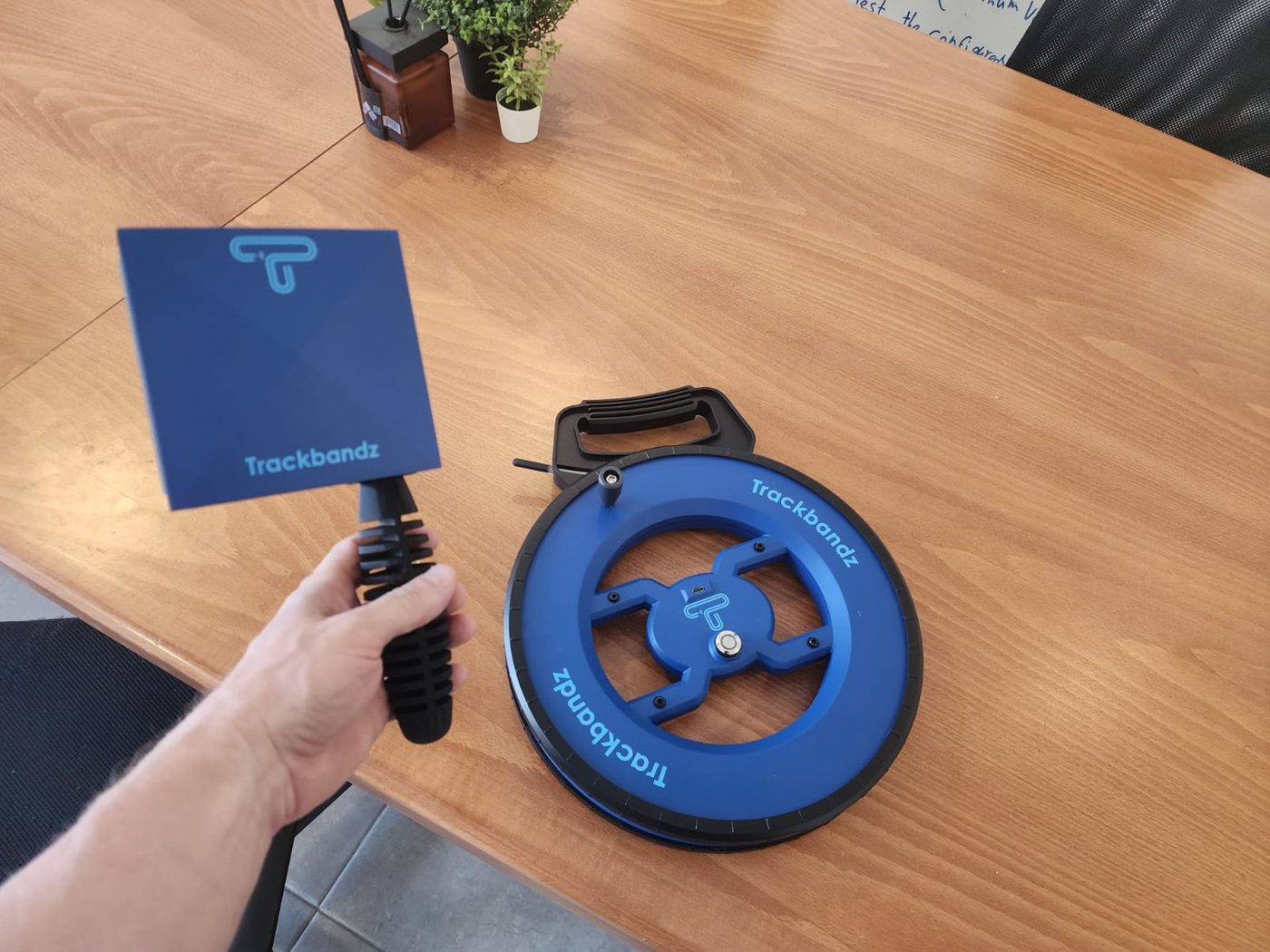
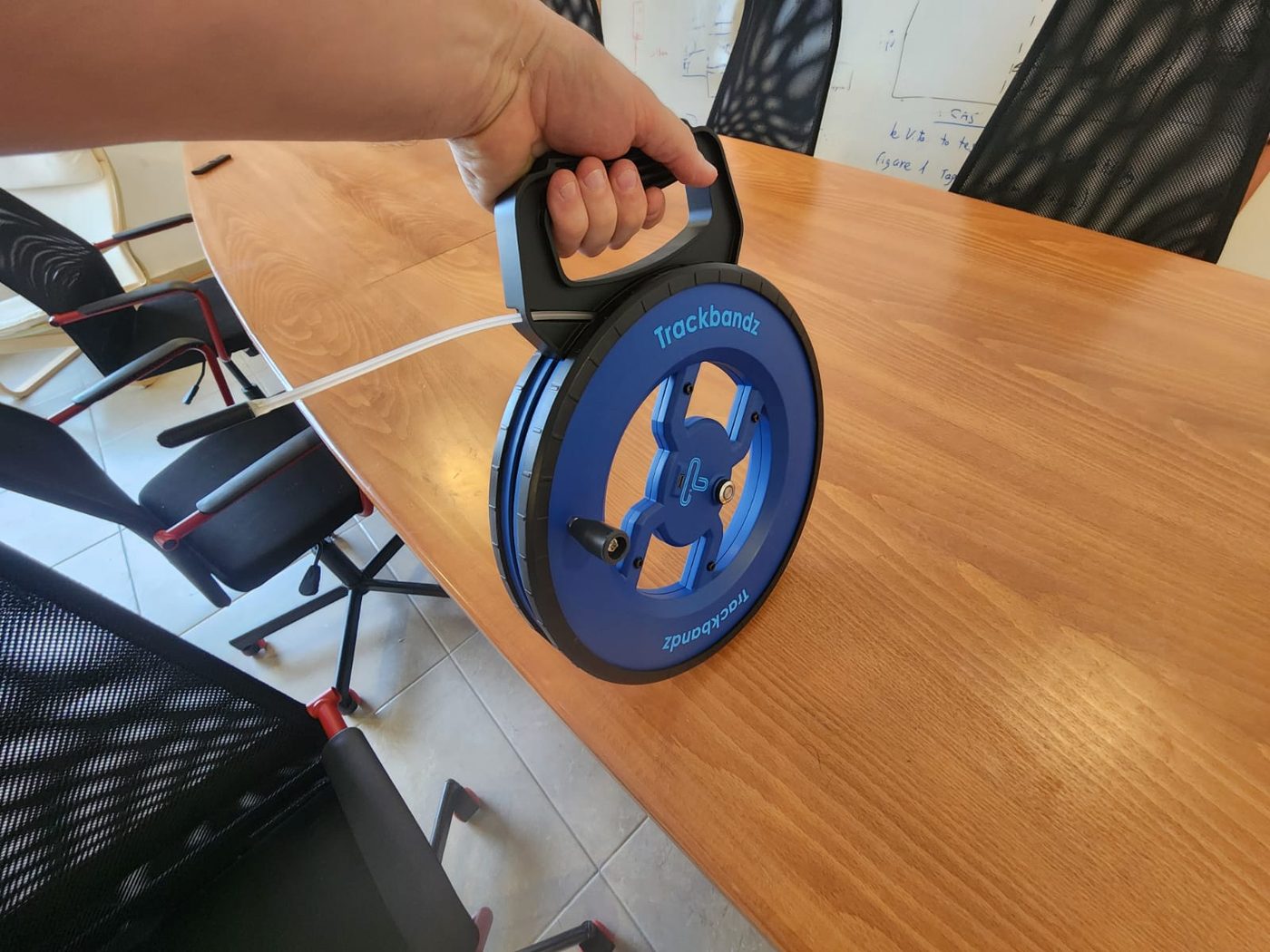
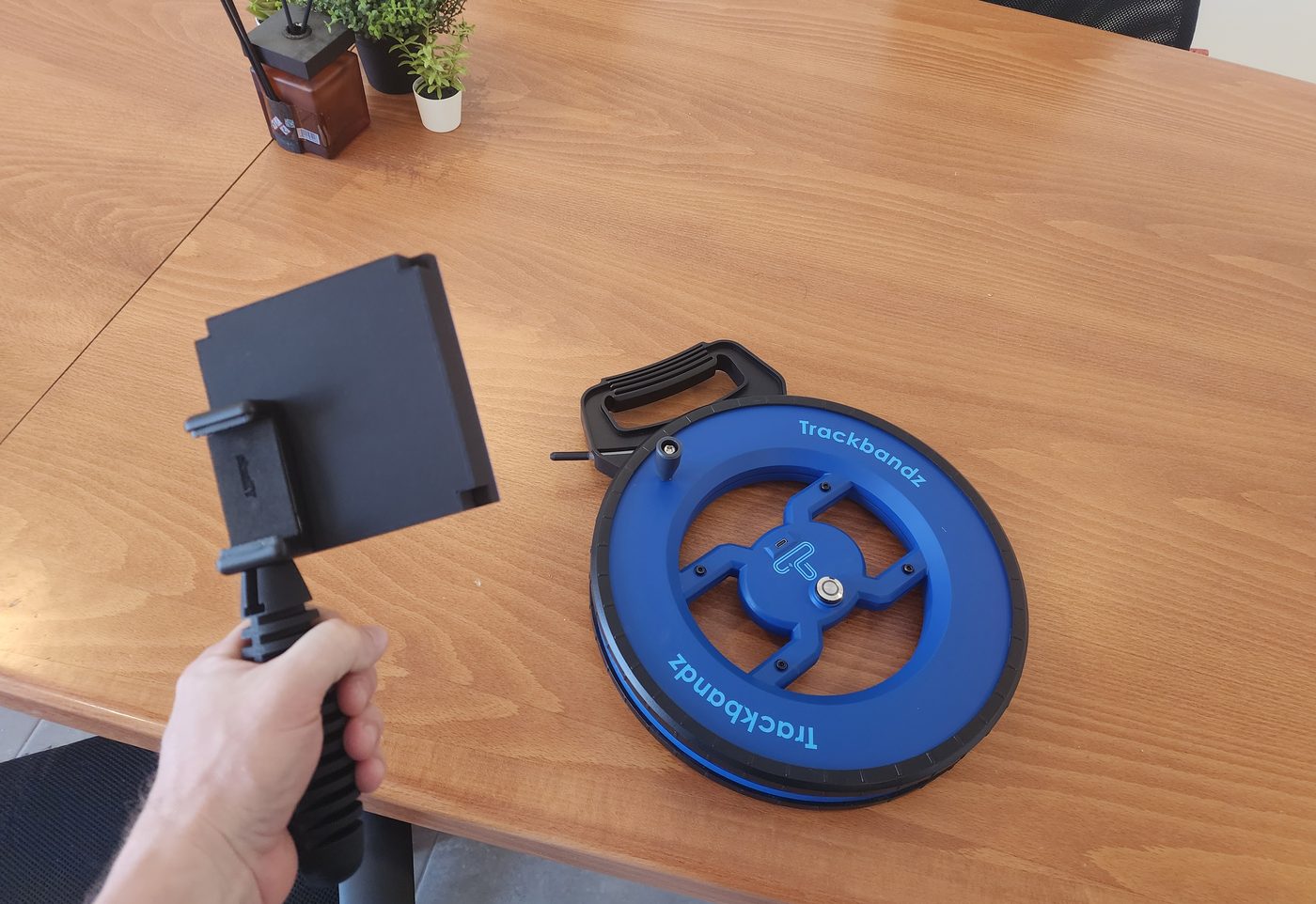
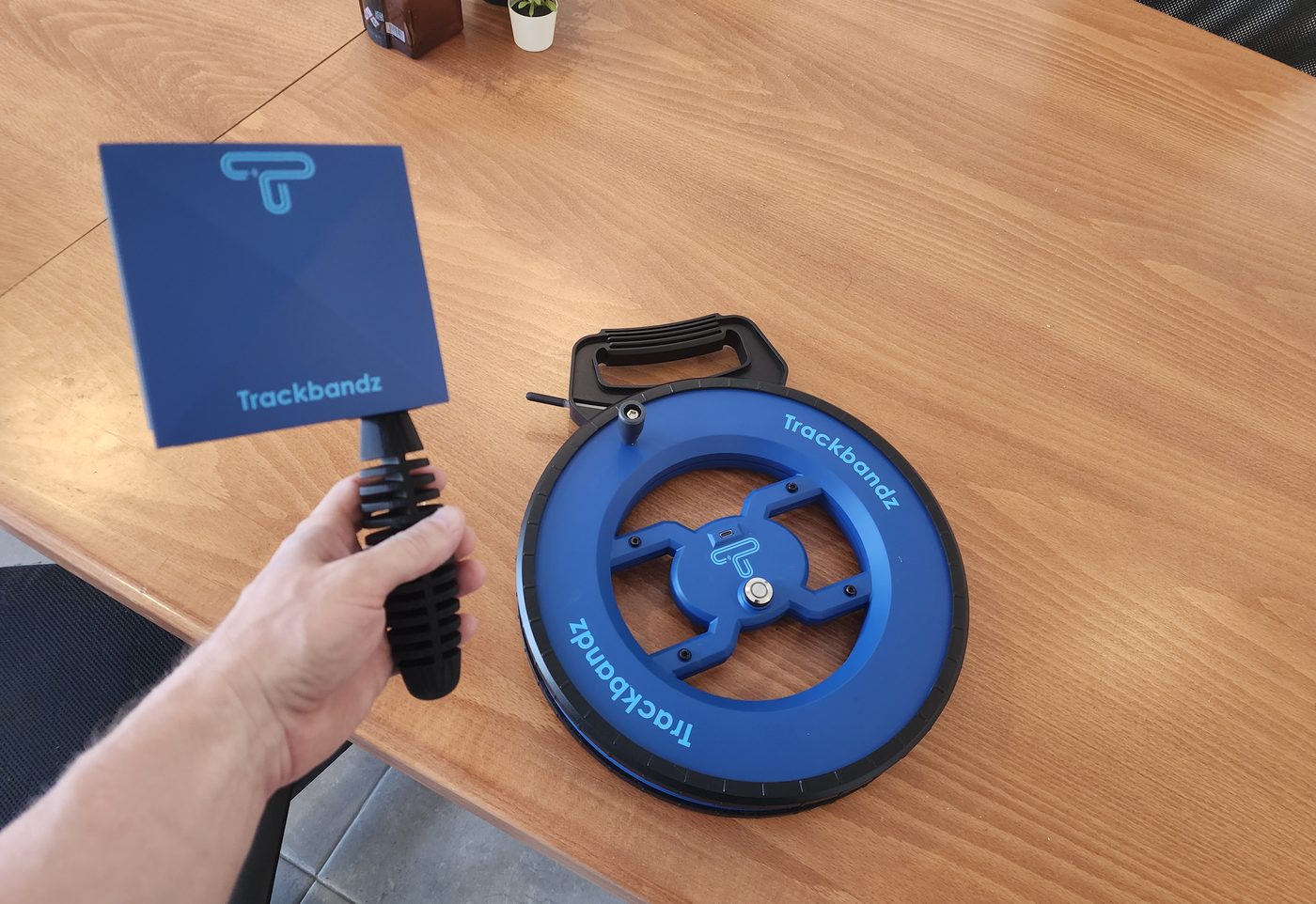
The system is built from two parts. The first is a reel carrying a semi-rigid push tape with a tiny waterproof radio beacon at its tip; the tape is fed into the pipe until the beacon stops at the blockage. The second is a handheld locator built around a multi-element directional antenna that measures the angle of arrival of the beacon's Bluetooth signal — BLE AoA. Sweeping the locator above ground, the operator watches an arrow on a smartphone screen converge on the transmitter; standing directly over it marks the digging spot. Accuracy lives or dies on antenna design — the element array, spacing, and shielding — which made this first and foremost an exercise in wireless electronics development.
From Prototype to Working Tool
The in-pipe capsule was designed as a sealed cylinder that slides through pipe bends, and the reel — a reinforced plastic body with a carry handle — was designed for plastic production from day one. Prototypes were built by 3D printing and tested on real pipe runs, while the software that turns angle measurements into a navigation arrow was developed hand in hand with the hardware — a classic hardware-software integration effort. Field tests measured accuracy at different pipe depths and under different surfaces, from concrete slab to garden soil, and the locating algorithm was tuned to compensate for signal distortion from nearby metal such as parallel water lines or rebar in the floor. Charging was simplified as well: a single USB-C connector serves both units.
What This Project Shows
The product's value is not the technology itself but the savings it buys: one accurate point on the floor is worth a day of labor, an intact floor, and a satisfied customer. It is a compact example of carrying a concept all the way from idea to product.
Have a product idea of your own? Contact the Projects House team through our form and we will be glad to take it from concept to reality.
Photos from the project