The Need
Anyone who cleans a litter box daily knows the limits of the standard scoop: round holes that let litter pass slowly, a small body that forces too many passes, and a front edge that bends or snaps when you scrape stuck waste off the bottom of the box. The client came to us after a deep review of the products already on the market, carrying a precise list of requirements for a better tool — an excellent starting point for validating an idea against its market, and a textbook setup for focused new product development.
The Design Solution
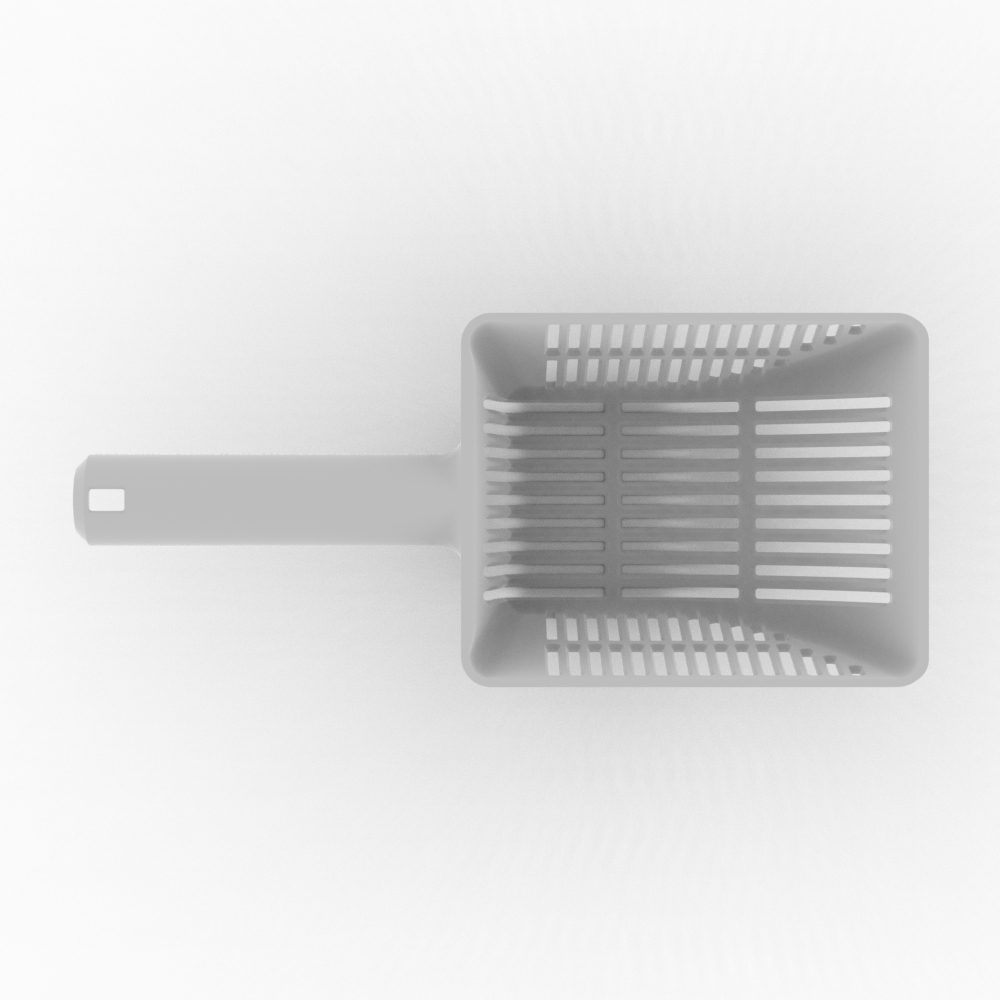
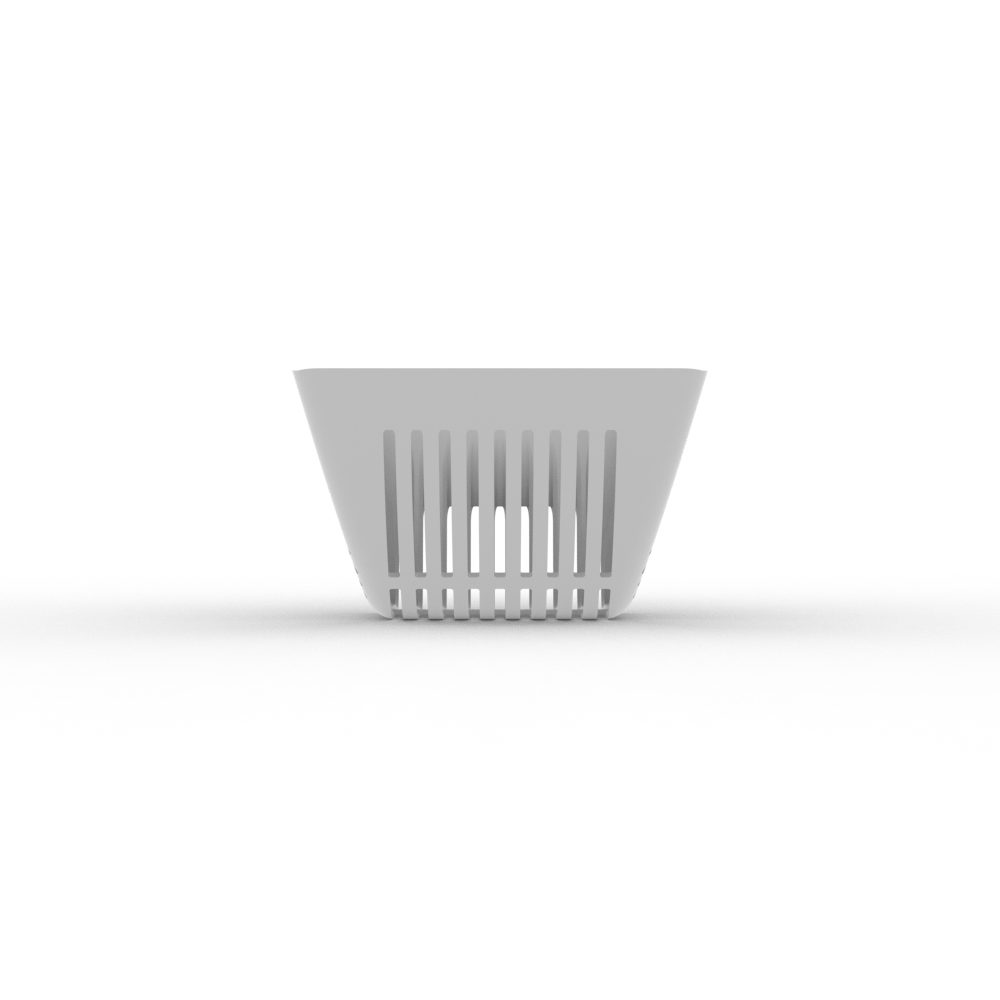
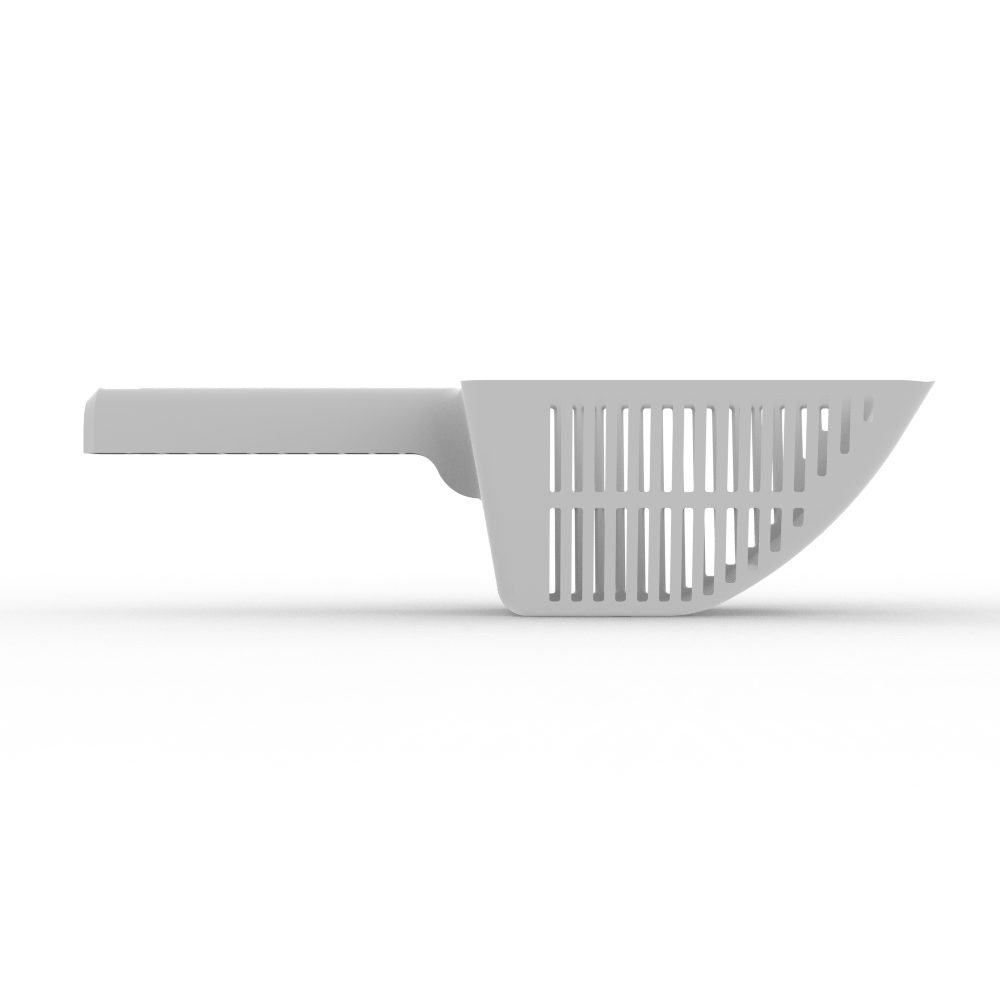
The scoop we designed is larger than the norm — 150 by 150 millimeters — so the job ends in fewer motions. The base carries three rows of long, narrow slots, 3 millimeters wide: narrow enough to stop clumps, long enough for clean litter to flow through continuously. The side walls are slotted too, so sifting continues even when the scoop is tilted. The ridges between the slots are shaped as sloped roofs that direct litter into the slots instead of carrying it — a detail that looks minor but sets the real-world sifting rate. It is the kind of decision that defines good industrial design.
The Front Edge — a Tool in Its Own Right
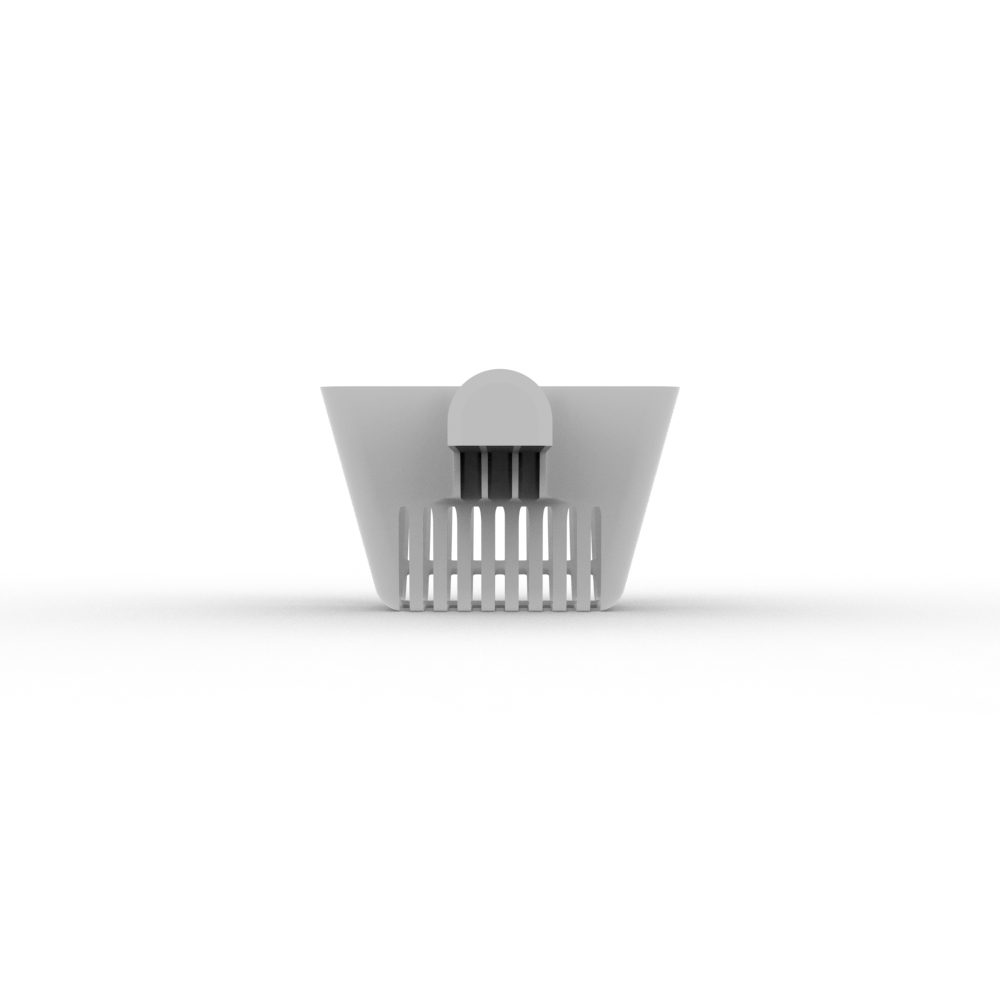
The front of the scoop is a perfectly flat, thickened surface ending in a sharp edge — like a putty knife. It is meant to scrape stuck waste off the bottom of the box without flexing and without breaking, so it is deliberately thicker than the rest of the body, following sound mechanical engineering practice. The body behind it curves in an arch so litter piles into the scoop instead of spilling forward. The handle is round and joins the body through a filleted connection with no sharp corners — stress concentrations are exactly where a plastic scoop breaks.
Development Scope
- Industrial design: sifting geometry, ergonomics, and form.
- Plastics engineering: varying wall thicknesses and a material and finish chosen to be both flexible and strong.
- Production preparation: geometry suited to injection molding and unit-cost analysis — see manufacturing technologies.
The Lesson
Even a seemingly simple consumer product hides dozens of engineering decisions. The difference between an annoying scoop and an excellent one is a few millimeters in the right places: slot width, wall thickness, handle joint angle. You find those millimeters only by combining real user experience with systematic engineering.
Have an everyday product you know you could do better? Contact the Projects House team and let's design it right.
Photos from the project