Project built in collaboration with Gizmo Engineering
The Need
A motorized roller shutter is a powerful motor moving considerable weight — and it is blind. It doesn't know whether its path down holds a window-sill object, a flowerpot, a child's hand, or a slat that has caught crooked. The familiar results are broken slats, burned-out motors, and sometimes real injuries. The client asked for a system that watches over the shutter: detects any abnormal stop in real time, cuts the motor instantly, and alerts the user.
The Engineering Solution
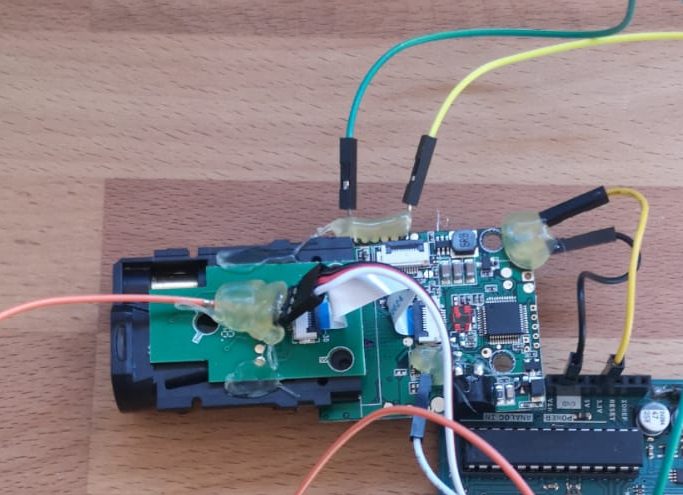
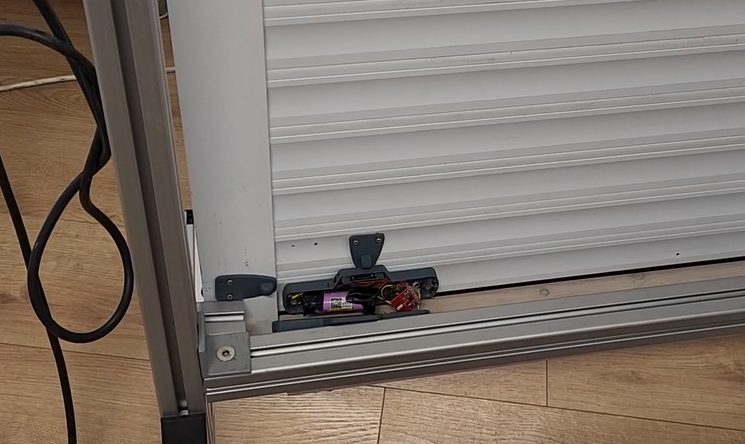
The system is built from two units that communicate wirelessly. A small sensing unit mounts on the shutter curtain itself and detects pinching through the change in spacing between the slats — when the shutter meets resistance, the slats compress, and the sensor wakes and transmits. The control unit sits by the motor, drives the operating relays, and the moment a pinch signal arrives it stops the motion and raises the shutter slightly to relieve the pressure.
This architecture — a sensor that sleeps most of the time and wakes on an event — rests on careful sensor selection and an ultra-low-power microcontroller, letting the curtain unit live for years on a single battery. The wireless link between the units was engineered around power budget, short range, and interference immunity, the kind of trade-offs we cover in electronics development.
Safety Before Everything
The safety logic requires a deliberate reset after every pinch event, so the shutter never resumes descending "on its own" after striking something. The system was developed through full electronic prototype stages and tested on a real shutter rig across thousands of cycles of operation, pinch, and release — see our approach to prototype development. Between cycles, edge scenarios were injected — power loss mid-descent, a weak battery in the curtain unit, radio interference — to verify the system always fails toward the safe state: stopping. The firmware behind that behavior is classic embedded software work.
The development spanned electronics for both units, software for pinch detection and controlled reset, and mechanical design for retrofitting onto existing shutters without modifying the track. Real safety isn't a sensor — it's behavior: fast detection, stop, pressure relief, and deliberate reset are what turn a blind motor into a system you can trust in a home with children.
Need a safety layer added to a powered product? Contact Projects House via our form.
Photos from the project