The Idea
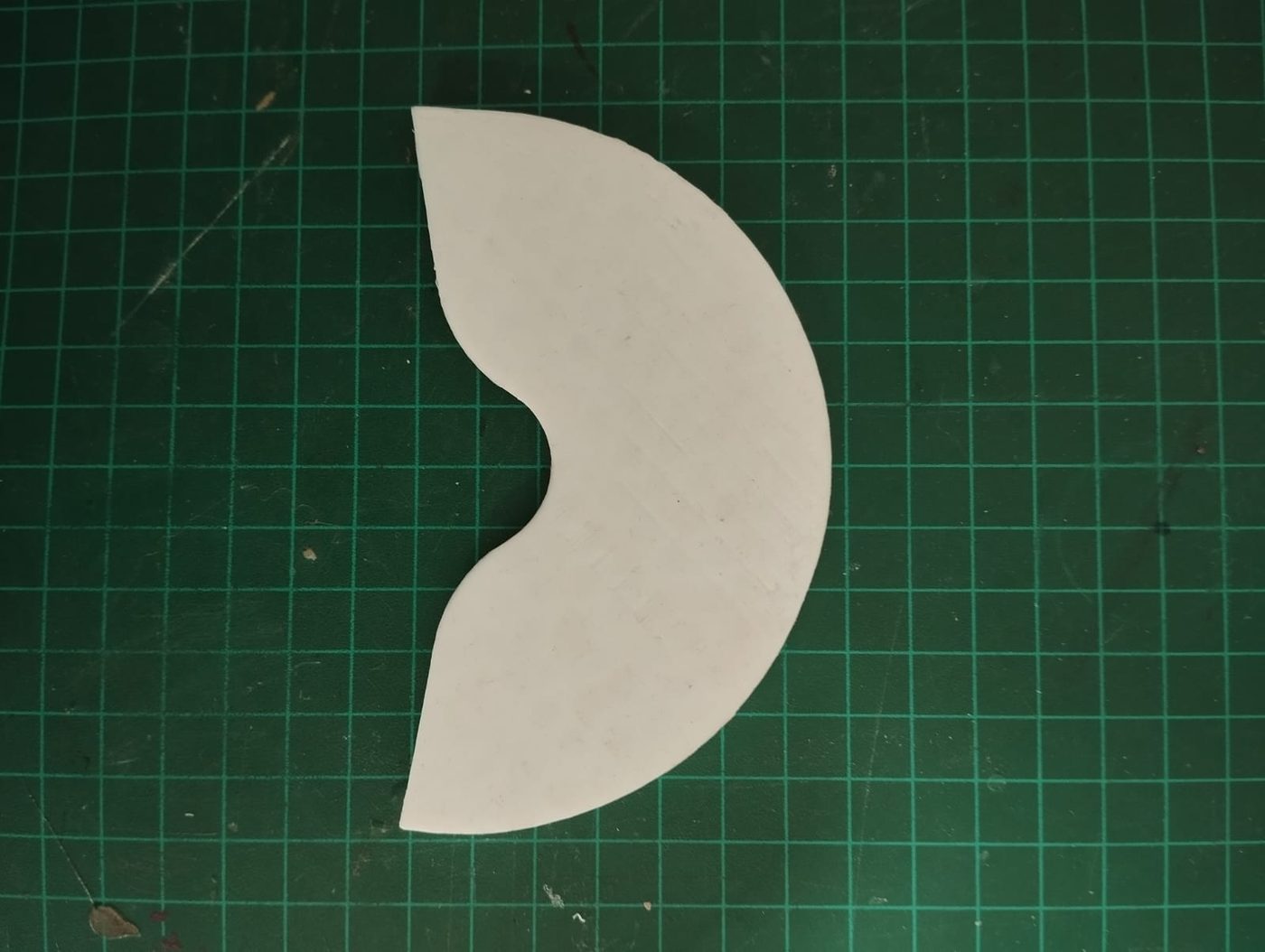
Most wind turbines people picture are horizontal-axis machines — three blades on a tall mast. But for the built environment and for small installations, a vertical axis has real advantages: it captures wind from any direction with no yaw mechanism, runs quieter, and is safer around people. The client came to us with a unique blade design intended to improve the efficiency of this class of turbine — a crescent-shaped profile with a flow recess that increases the drag difference between the driving side and the returning side.
From Sketch to Rotating Assembly
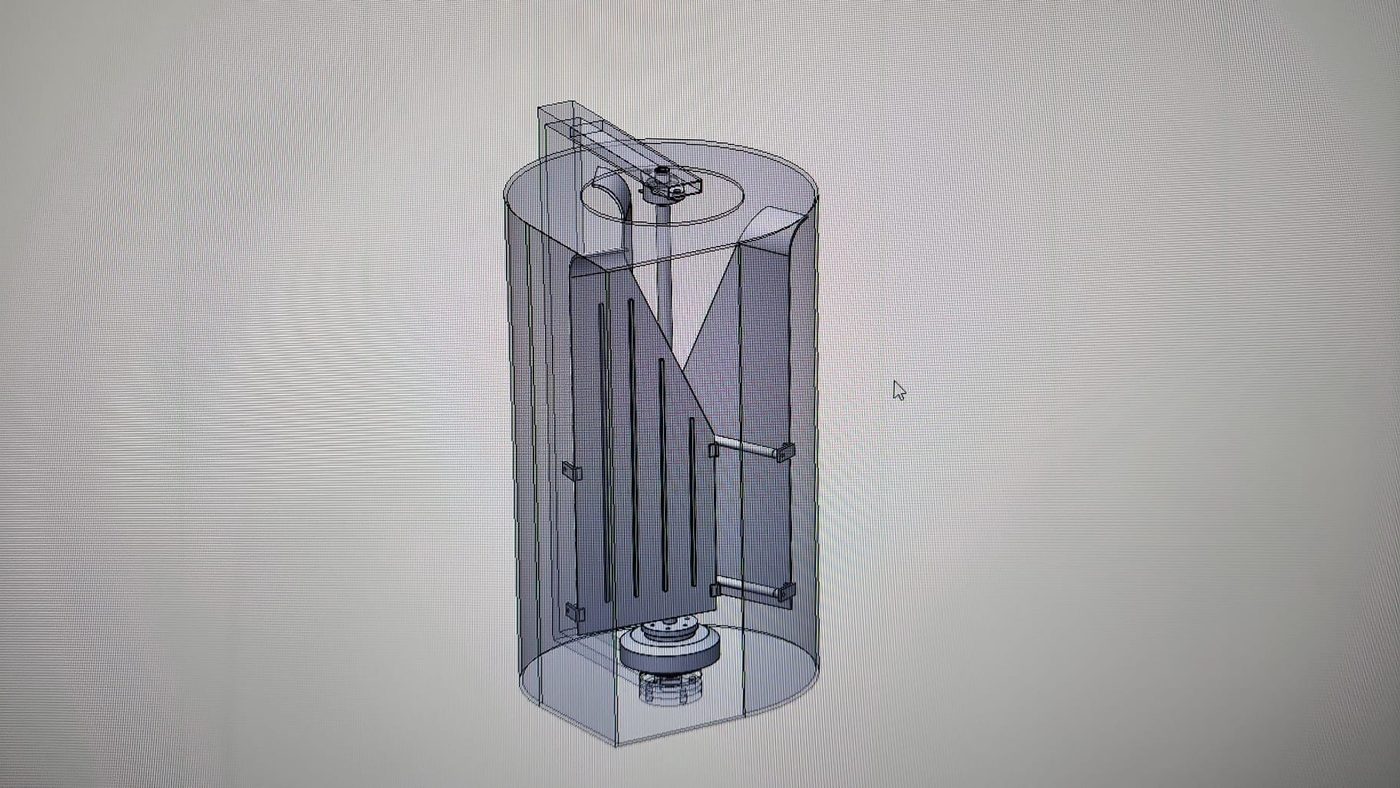
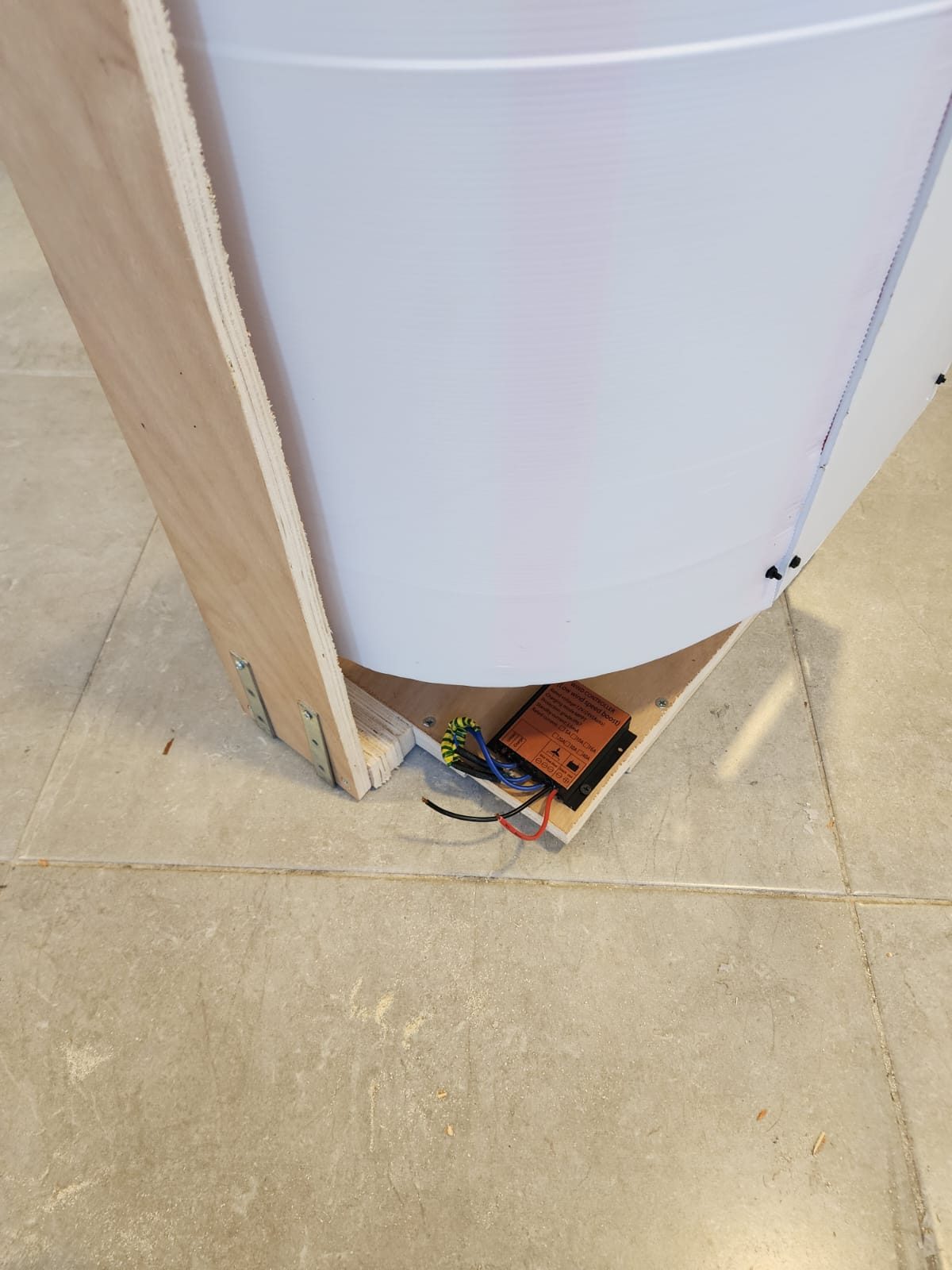
Around the blade profile we engineered the complete machine: rigid plastic blades on dedicated holders, aluminum carrier plates, a central shaft, a steel stand with a weather-resistant coating, and a generator at the base wired to a charge controller. A rotating assembly that stands in the wind demands rigorous work on balance, on bearing selection, and on fasteners that will not loosen under vibration — the fundamentals of solid mechanical engineering, verified with stress analysis and simulation before anything was built.
A Full-Scale Prototype
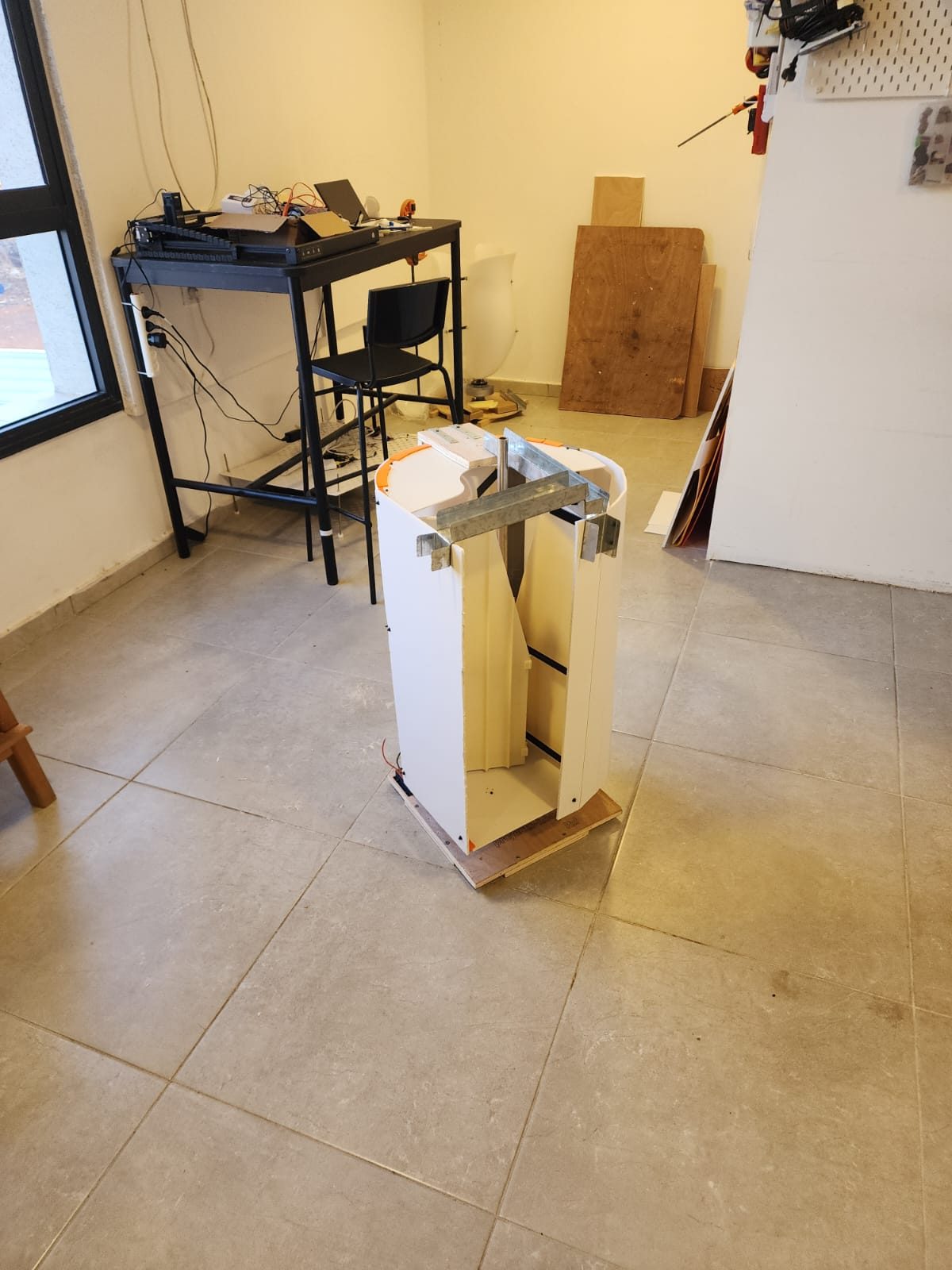
We first cut the blade profile as a desktop model to evaluate the shape, then moved to a full-scale prototype: a cylinder roughly half a meter in diameter built around a wooden frame for fast assembly, carrying the real blades, drivetrain, and generator. Auxiliary parts were produced by 3D printing, and the whole assembly was wired to a standard charge controller so real power output could be measured in real wind. That is exactly the point of a first functional model in prototyping: get to measurable data fast, before committing to tooling and production. The modular structure lets a blade set be swapped in a few hours, so every profile variation is measured on exactly the same platform and comparisons between versions stay clean.
Development Scope
- Aerodynamics: a unique blade profile and flow geometry.
- Mechanics: a balanced rotating structure, bearings, and outdoor-grade coatings.
- Electrical: generator, charge controller, and energy storage.
The Lesson
In renewable energy, the difference between an idea and a product is measured numbers. A full prototype wired to a real controller answers the question that matters most — how many watts actually come out of the wind. It is the fastest honest step on the road from idea to product.
Working on a clean-energy concept? Contact the Projects House team and let's get it to measurable data.
Photos from the project