Project built in collaboration with Gizmo Engineering
The Need
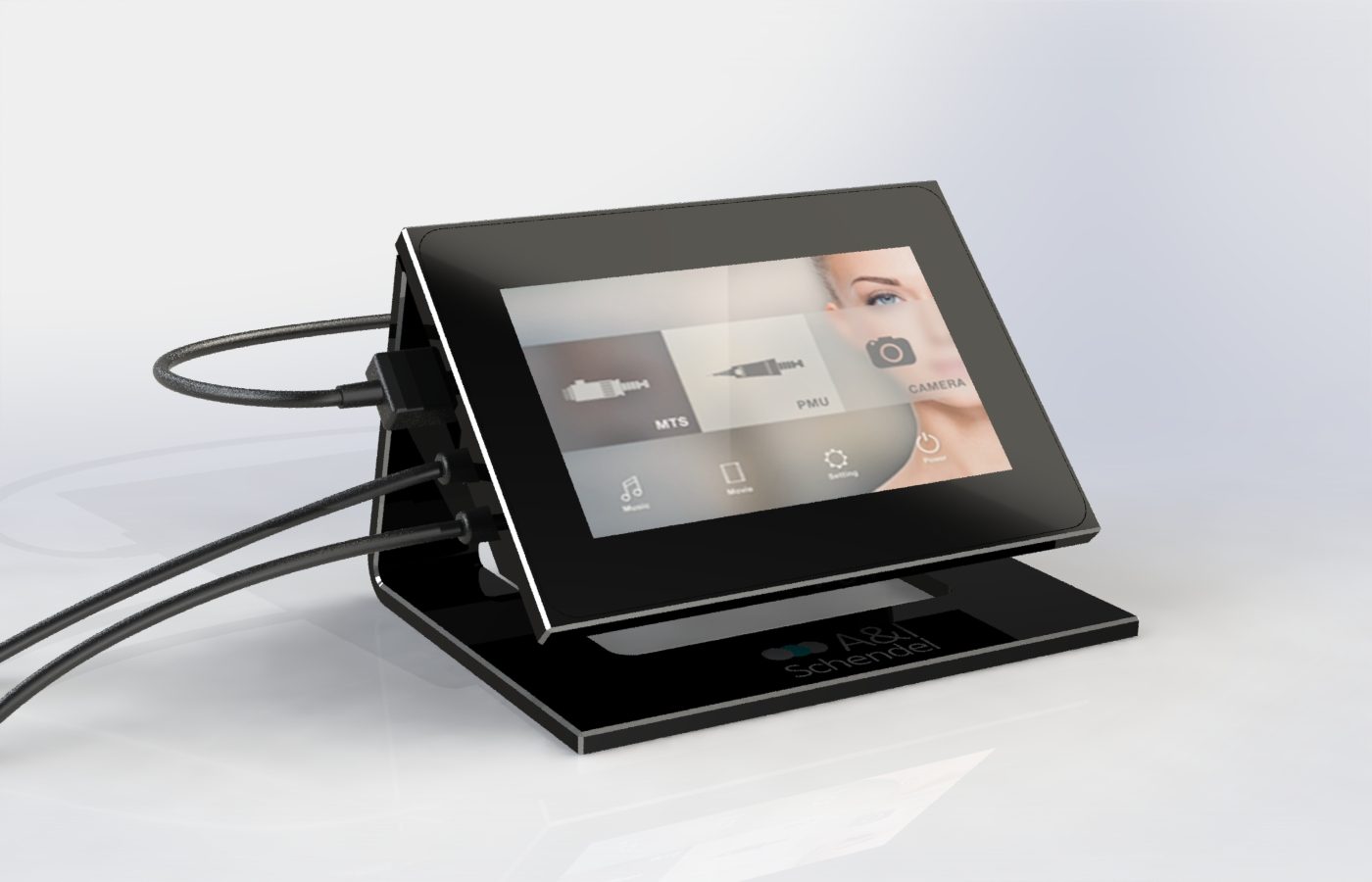
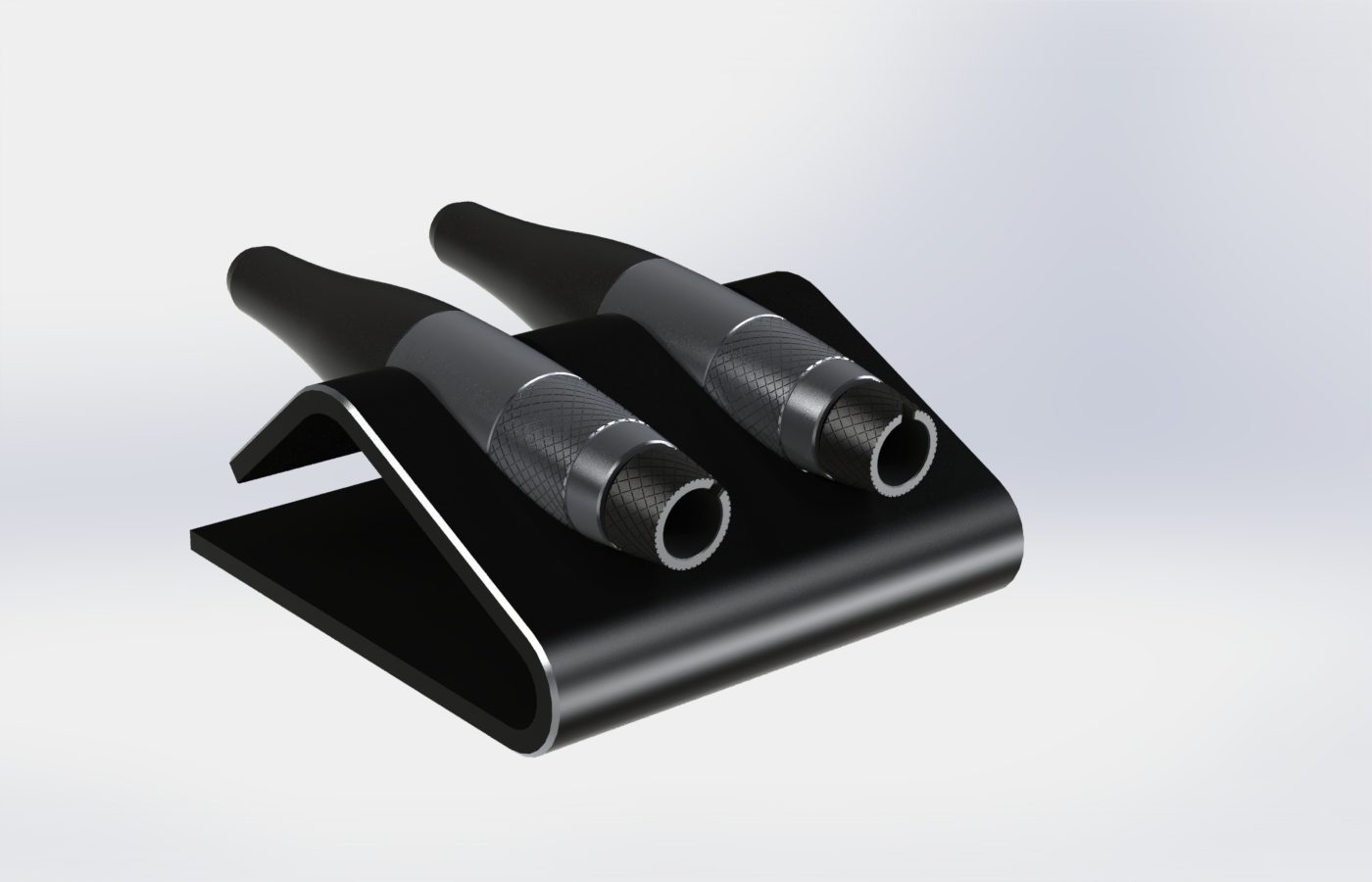
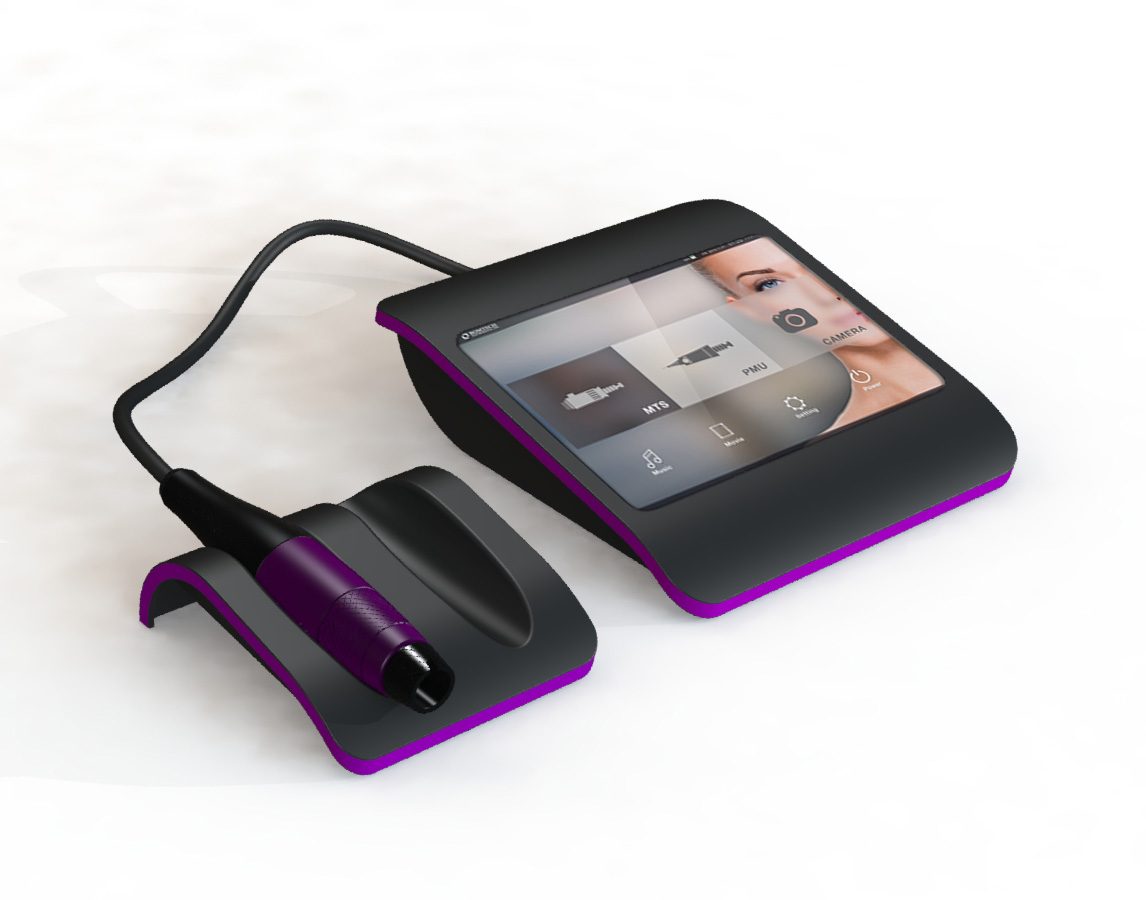
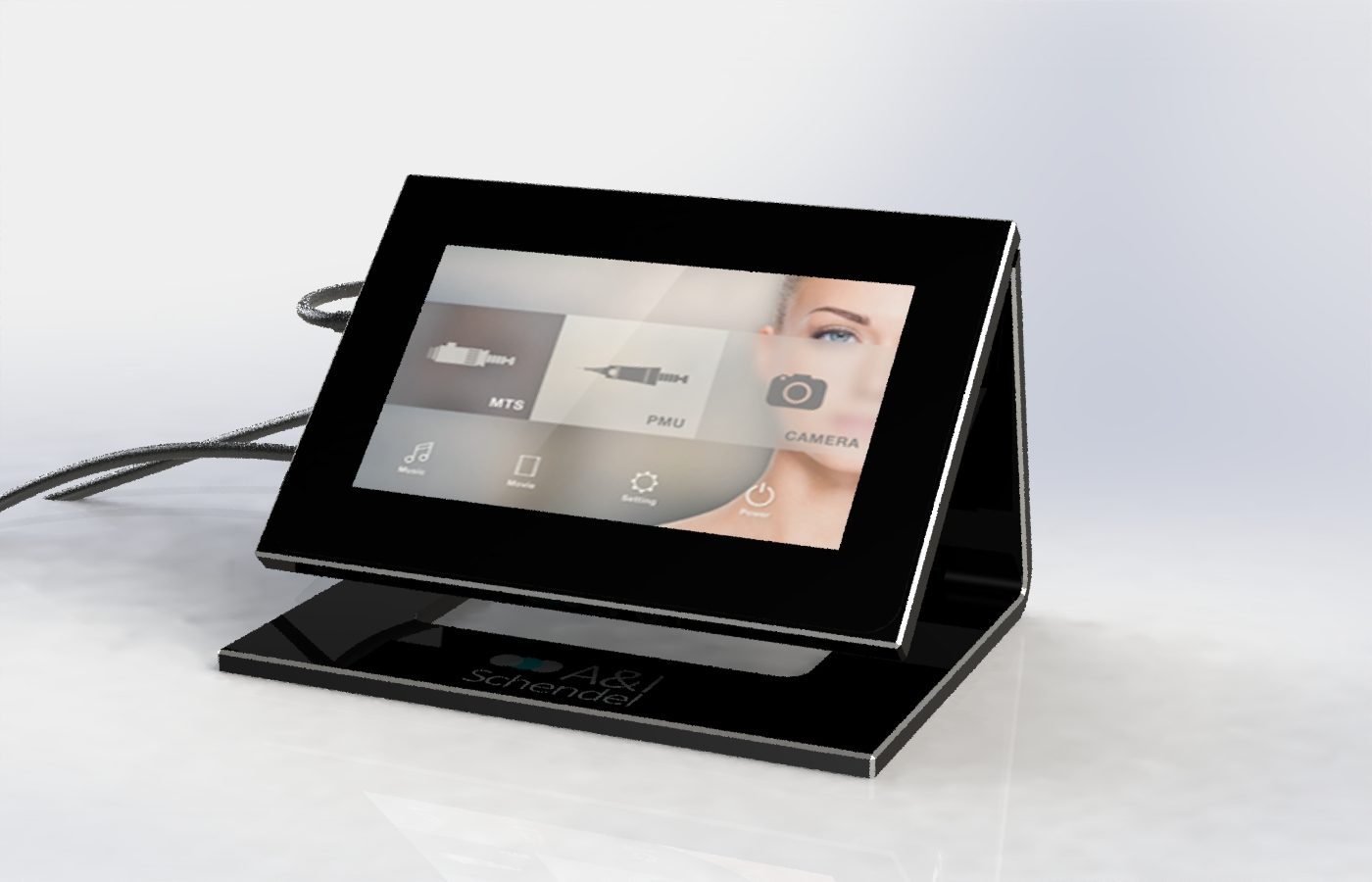
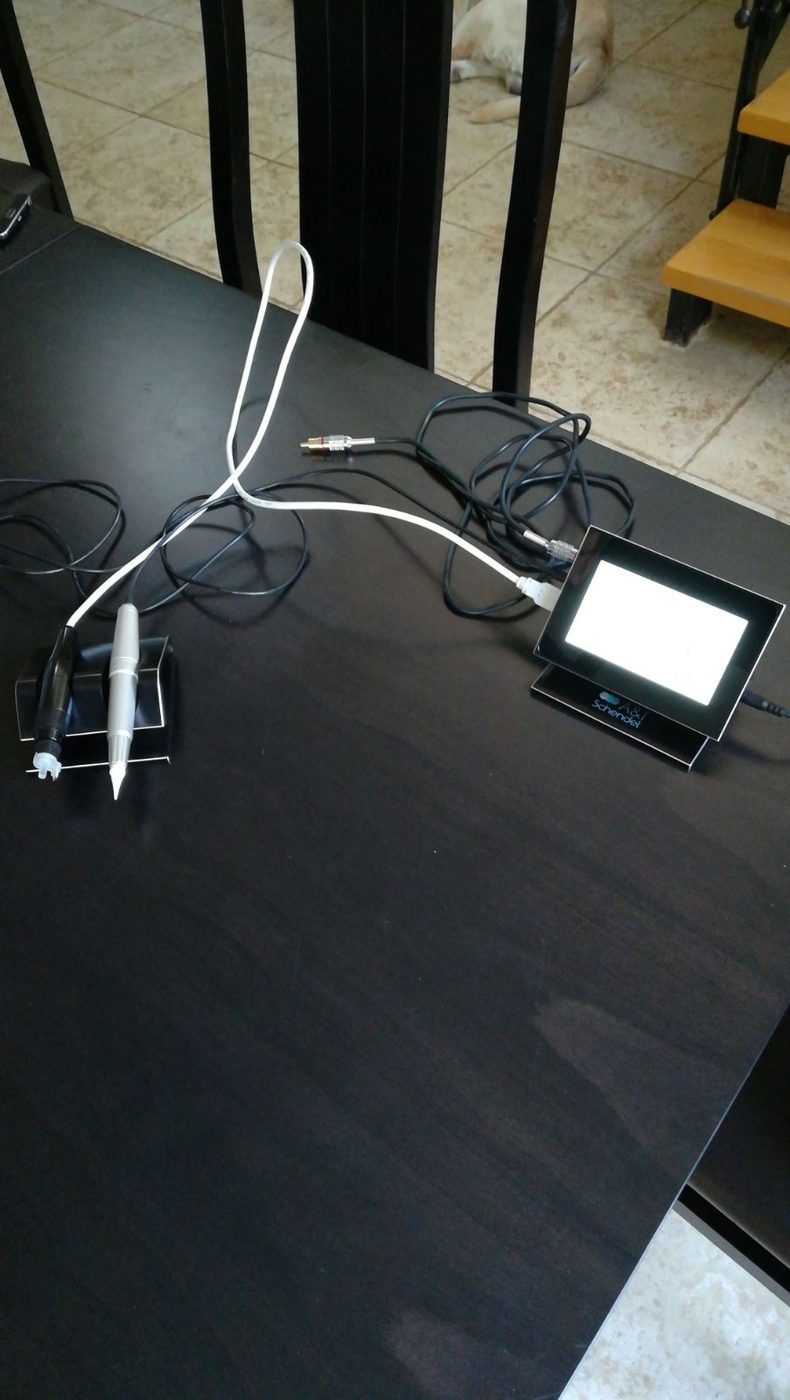
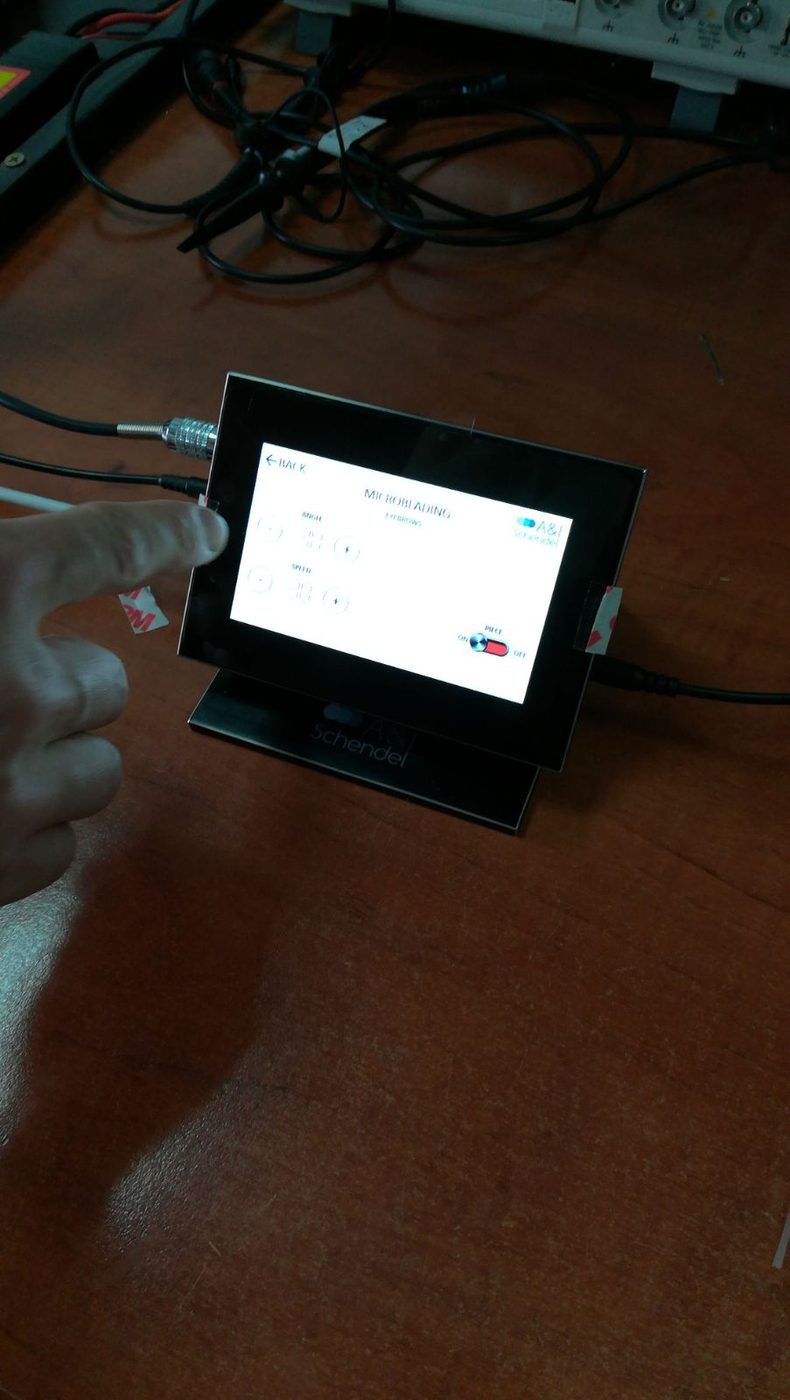
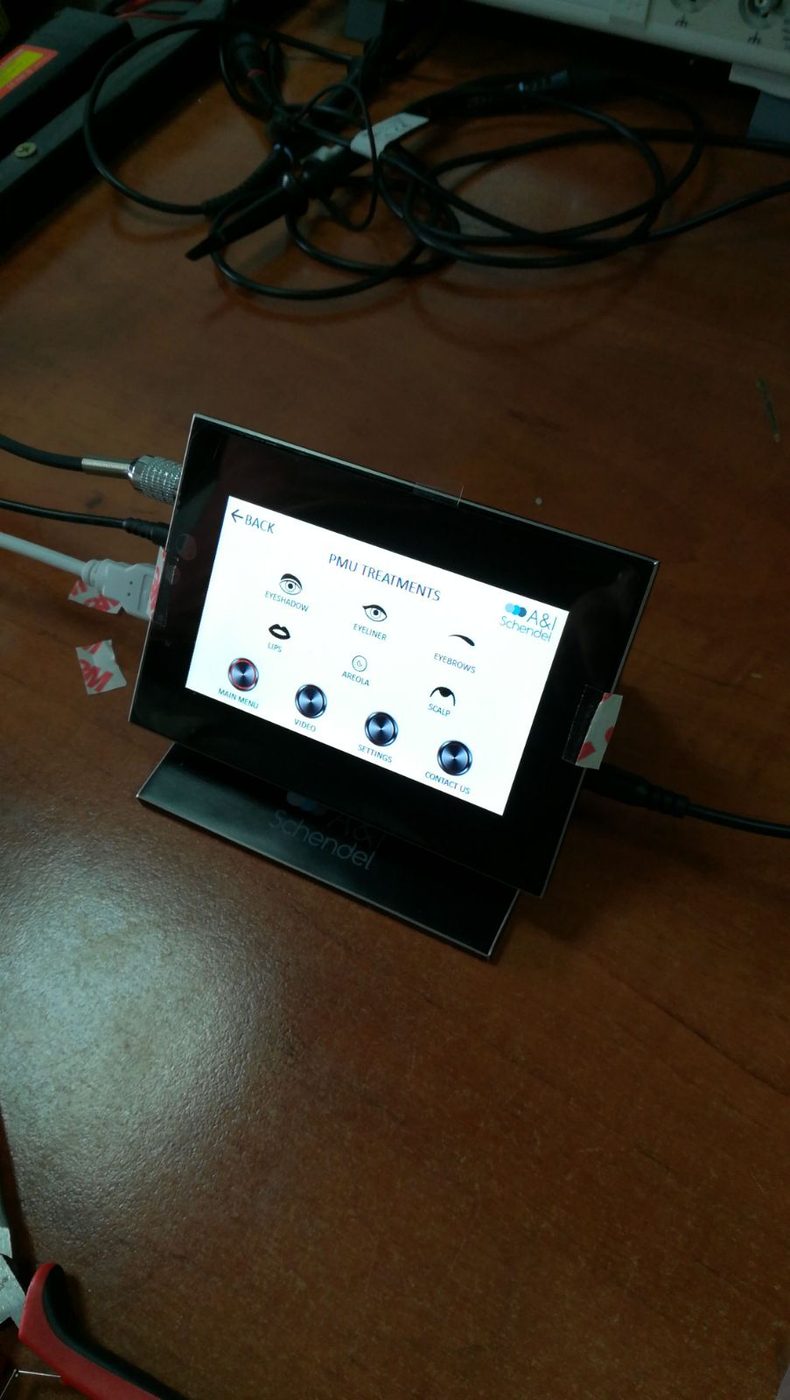
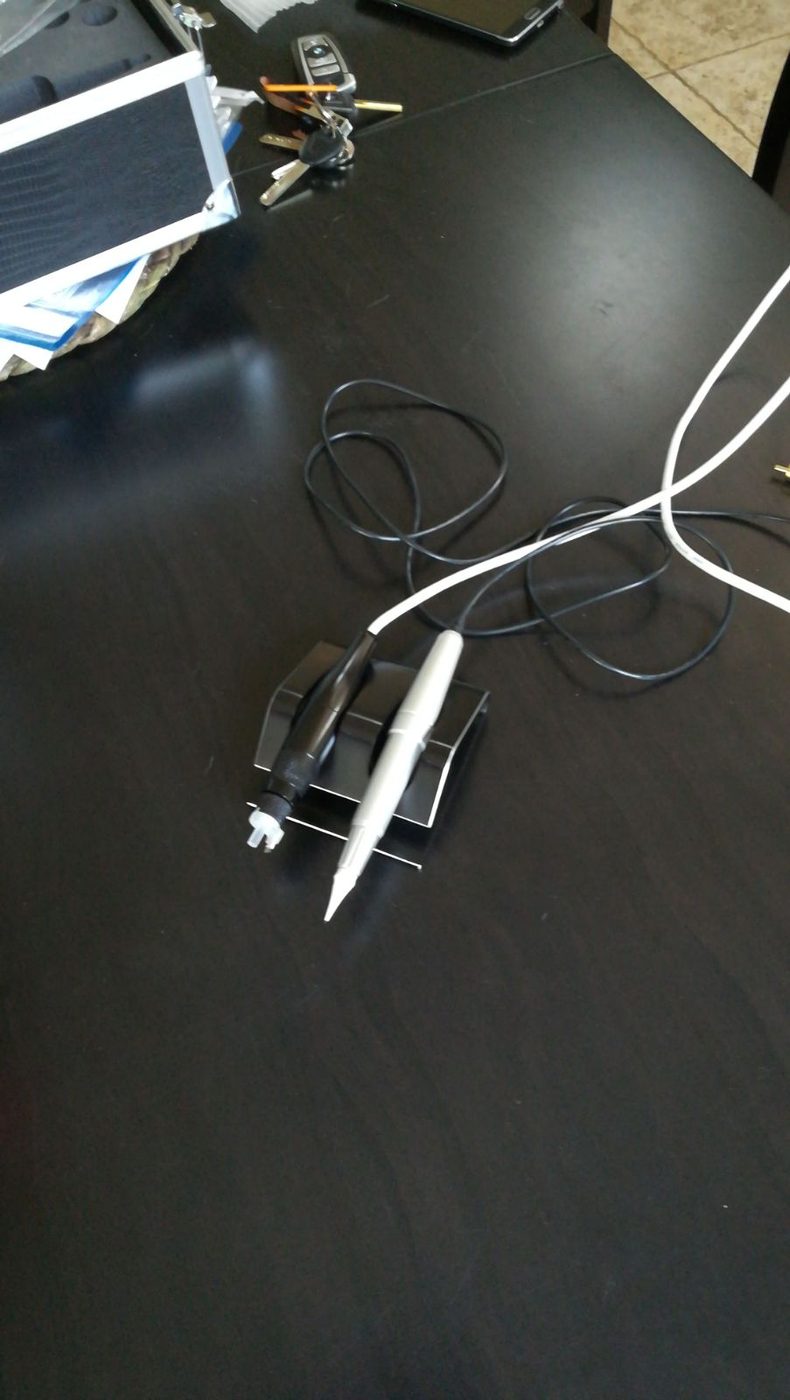
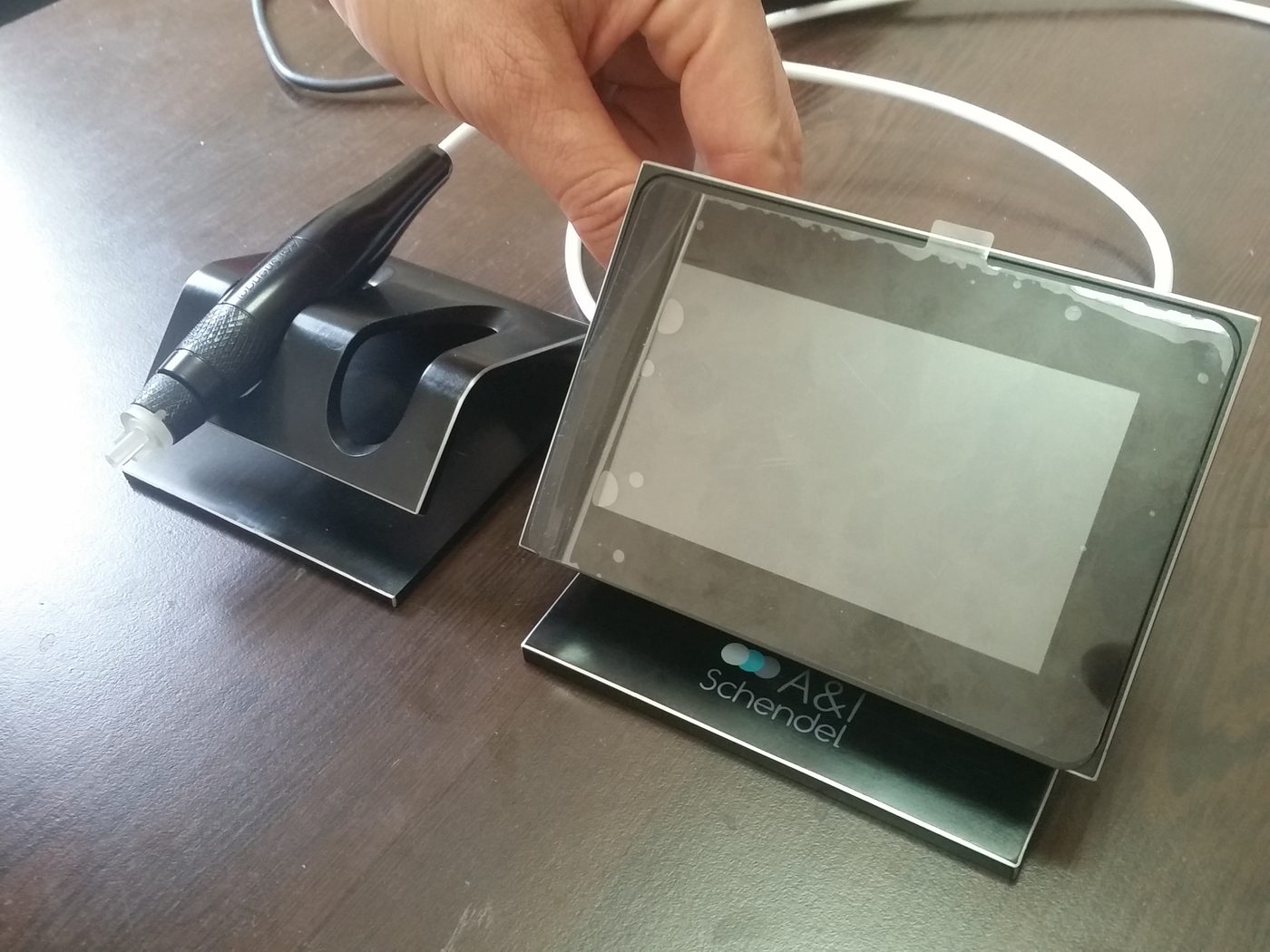
Tattoo work demands precise, repeatable control over depth, pace, and motion — and today it rests almost entirely on the artist's experience. This product was conceived to give the artist a working aid: a device with a touchscreen console, a set of dedicated tools, and software that manages the settings.
Three Constraints That Defined the Design
Hygiene first. A device that lives in an environment where skin is broken must be disinfectable, and its geometry follows from that: rounded corners, minimal grooves, no gaps for liquid to enter, and an enclosure that can be wiped down completely. Parts that touch the client directly were designed either as disposables or as separately sterilizable items.
Operation with one hand occupied. The artist holds a tool in one hand and cannot fiddle with an interface. Splitting commands between the screen and the tool itself was a central decision: complex setup happens on the screen before the work, and fast control happens on the tool during it — a pedal or one large button. An interface that demands two hands mid-session is unusable in practice.
A screen in a harsh environment. A touchscreen that is operated with gloves and wiped with disinfectant is not a phone screen. It needs glove-compatible touch sensing and a surface that withstands chemicals over time.
Development Scope
The project spanned electronics development — precise low-power motor control and display management; embedded software for settings management, stored profiles, and real-time operation; mechanical engineering of the dedicated tools and housing; and industrial design, because a professional product has to look professional.
A Regulatory Boundary Worth Knowing
A product that contacts skin, in an environment with possible blood exposure, sits close to the boundary of a medical device — and crossing that line changes the scope of development and documentation dramatically. It is one of the first questions we clarify on projects like this, as we explain in medical device development.
Developing a professional tool for a demanding environment? Contact Projects House and tell us about it.
Photos from the project