Project developed in partnership with Gizmo Engineering
The Need
An EV battery fire is a rare event — but when one breaks out on a cargo ship loaded with thousands of vehicles, there is nowhere to run and no fire department to call. Incidents like these have made the ocean transport of electric vehicles one of the most pressing issues in marine insurance. The only way to prevent disaster is to detect a battery's abnormal heating long minutes before it turns into flame — and to raise the alarm while the crew can still act.
The Engineering Solution
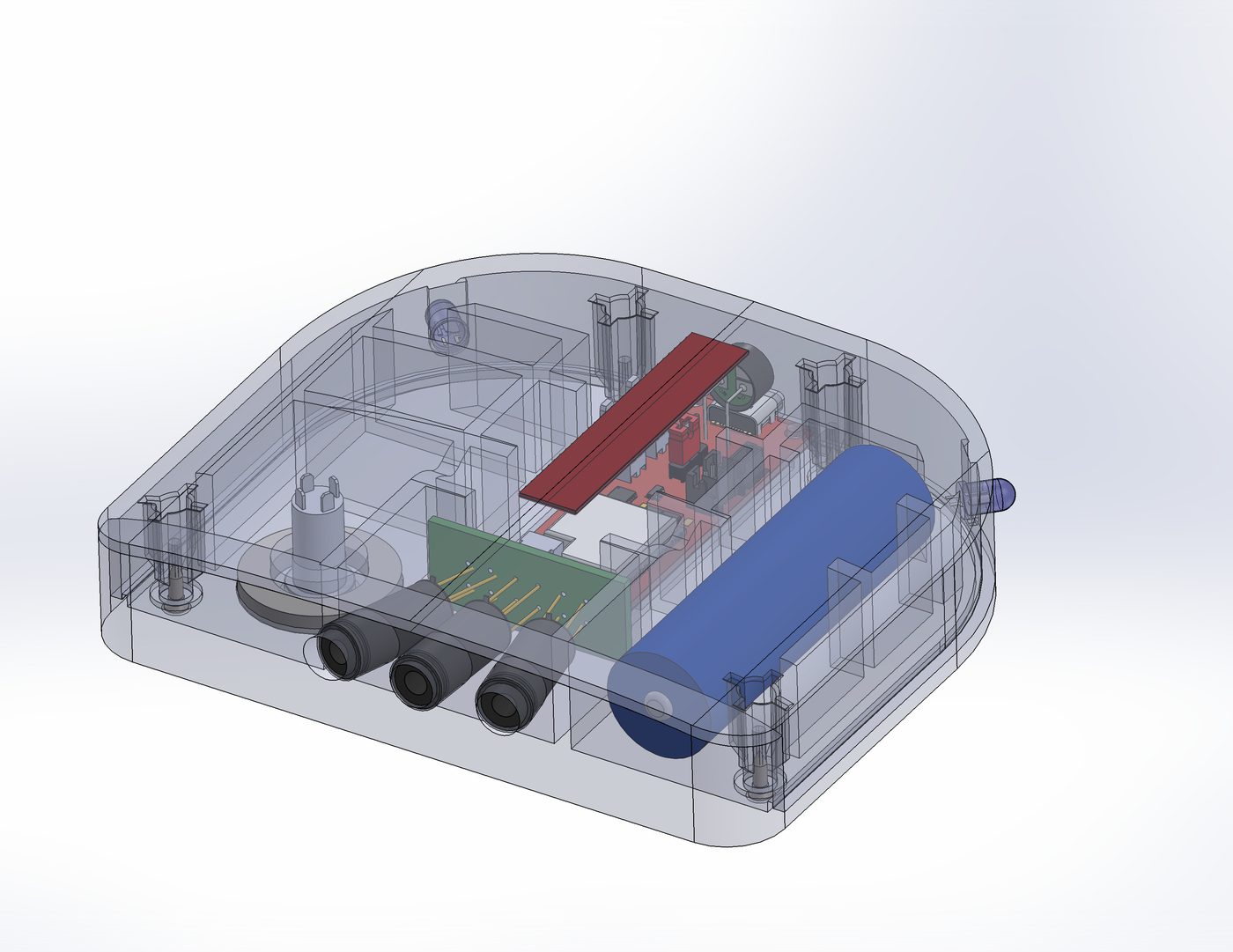
Projects House developed an autonomous floor unit that sits between the vehicles on the ship's deck. The device scans its surroundings with dedicated infrared sensors that map the temperature of the deck and the vehicles around it, watching for an abnormal change in heating rate — the thermal signature of a battery cell entering thermal runaway. The units communicate with each other and with edge gateways over a BLE network, so an alert from any point on deck reaches the bridge within seconds. The protocol and network topology were selected around range, power consumption, and a dense all-metal environment — classic trade-offs in electronics development for connected products.
From the Lab to the Deck
A marine environment is among the harshest an electronic product can face: salt, humidity, vibration, and swinging temperatures demand a ruggedized enclosure and disciplined reliability testing — a cornerstone of sound new product development. The system went through a controlled field pilot in which dozens of parking positions were thermally mapped and the alert thresholds calibrated against real conditions, the kind of staged customer pilot we describe in our product development services. Dozens of scenarios were measured — a car baking in the sun, a hot engine just switched off, and a genuine point heat source — to teach the algorithm to tell routine from danger and minimize the false alarms that defeat monitoring systems in the field. All monitoring data is collected at a central control station.
Development Scope
- Sensing: infrared thermal mapping and an anomaly-detection algorithm.
- Electronics: a multi-unit BLE network and power management for extended operation.
- Mechanics: a ruggedized marine enclosure with rapid deck placement.
Takeaway
In safety products, value is measured in the minutes you buy: a device that beats the standard smoke detector by a quarter of an hour turns a catastrophic event into a managed fault.
Building a safety-critical product? Contact Projects House through the form and let's discuss how to engineer it right.